
Sony FX5: What's Actually New, and What It Means for the Rest of Us

Disclosure: We feature products and services we think you'll find useful. If you buy through our links, Beyond Photo Tips may earn a small commission, at no extra cost to you. As an Amazon Associate I earn from qualifying purchases. Read the full disclosure.
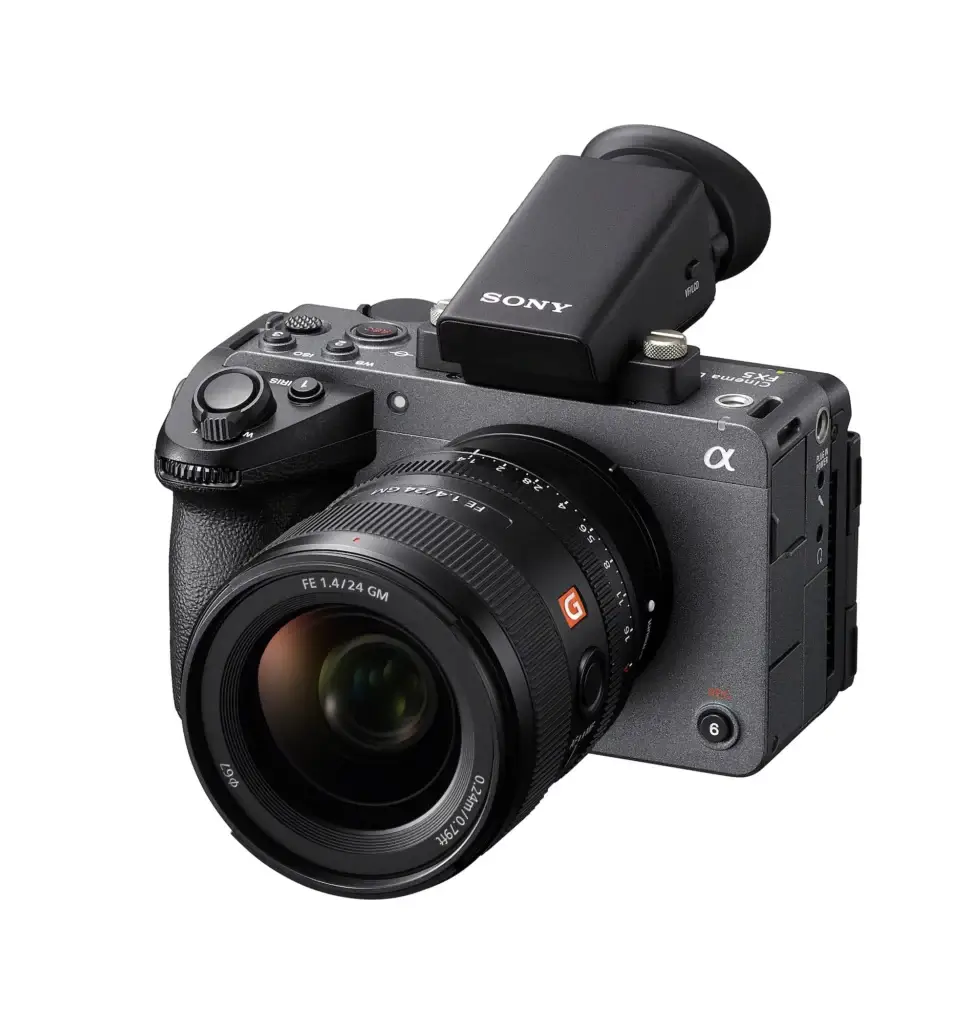
Sony announced the FX5 (ILME-FX5) on July 22, and the reaction from the video community has been louder than anything the company has released in a few years. It slots between the FX3 and the FX6, and Sony has been explicit that it replaces neither.
This is a cinema camera, not a hybrid. But two of its headline features have been fenced off inside cameras costing around ten times as much until now, and that boundary moving is worth paying attention to even if you never shoot a frame of video.
The Three Specs That Matter
A stacked 16.6MP sensor. The FX3 and FX6 both used 12MP sensors that were not stacked. Stacking means faster readout, which means less rolling shutter skew. Sony would not comment on how the sensor relates to the 66.8MP unit in the a7R VI, though the pixel math has invited obvious speculation.
Internal 16-bit X-OCN RAW. Until now, X-OCN recording lived on the VENICE 2 and BURANO, and FX3 owners needed an external recorder to capture RAW at all. Sony also introduced two new compression flavors, C1 and C2, with C2 landing at bitrates below the FX3’s intraframe XAVC S-I codec. The catch: editing applications do not support C1 and C2 yet, so Sony is shipping a beta RAW Viewer for playback while NLE support catches up.
Three base ISOs. ISO 800, 4,000, and 12,800, each a distinct base sensitivity rather than digital amplification. The FX2 offers 800 and 4,000, the FX3a offers 800 and 12,800, and the FX5 combines all three. Sony claims 15-plus stops of dynamic range in S-Log3, rising past 16 stops with the new Dual Gain mode.
Add 5K open gate at 3:2, which preserves the full sensor area for anamorphic work and vertical reframing, and you have a camera that answers most of the complaints leveled at the FX3.
What to Read Past the Headlines
A few things the launch coverage buries.
The fast frame rates are a staged release. Firmware version 1 covers the core modes at launch. Version 2 is supposed to add 5K open gate at 120p, full-frame 5K RAW up to 120p, and the 4K 240p mode. Sony has not announced when version 2 arrives. If 240p is the reason you want this camera, then beware. That’s not what it has right now. That is a promise that may or may not come through.
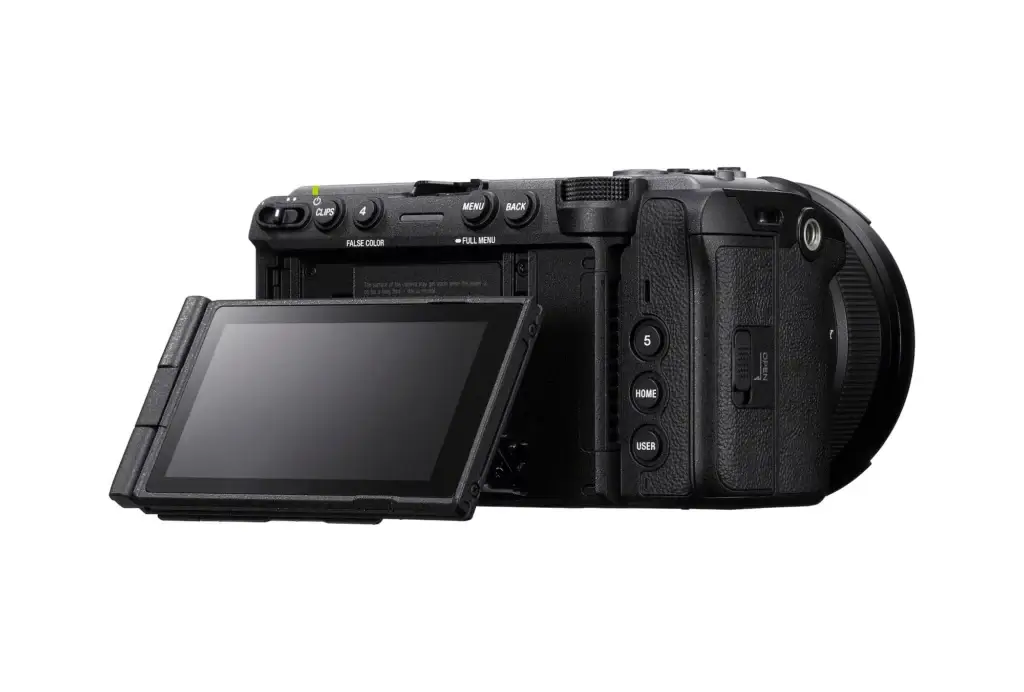
Your FX3 cage will not fit. The accessory screw positions moved, which also means the XLR-H1 handle from the FX3 cannot attach. The new tiltable EVF occupies the same mounting point as the XLR handle, so you choose one or the other, and 32-bit float audio only works with the handle.
Anamorphic modes disable both stabilization and autofocus.
And for anyone wondering whether this could double as a stills body: there is no photo mode at all, despite a physical shutter button on the camera. Sony has drawn that line clearly.
The Interface Change Is the Real Story
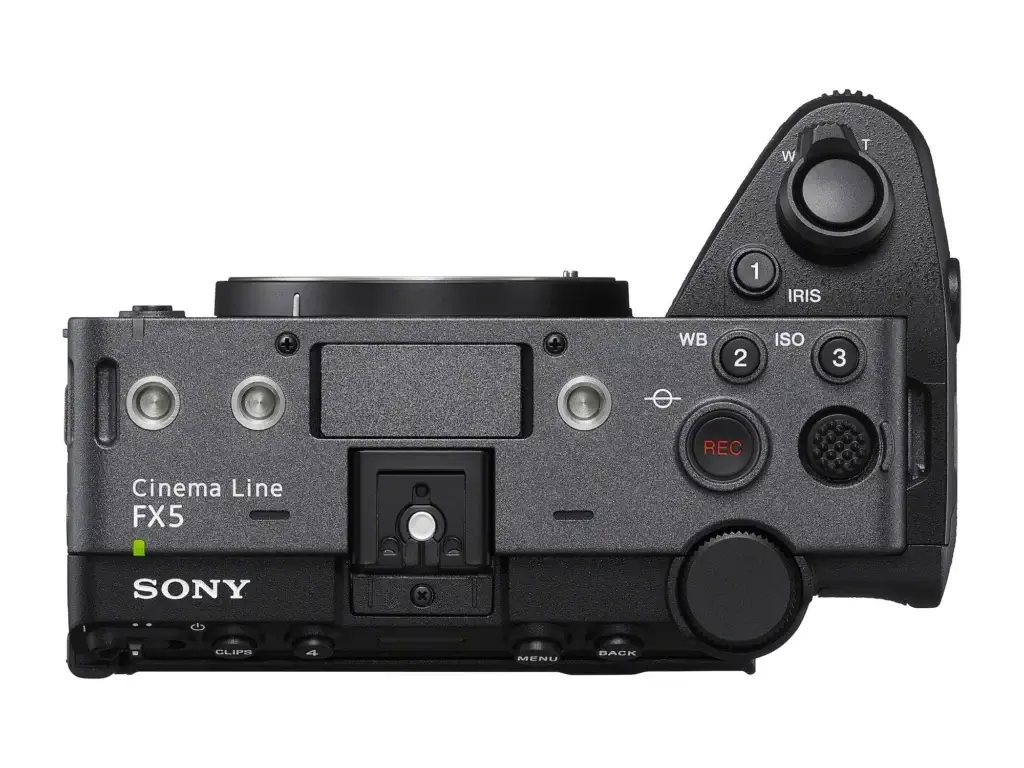
Sony dropped the Alpha-derived menu system entirely. The FX5 runs the professional menu structure from the FX6, VENICE 2, and BURANO, including the BIG6 home screen, and the FX3’s rear control wheel is replaced by a multifunction dial inherited from the VENICE 2. False color arrives natively, mapped to the C4 button out of the box, alongside newly added waveform, vectorscope, and focus map displays.
That is the clearest signal of who this camera is for. Crews already running Sony cinema bodies will feel at home immediately. FX3 upgraders face a real learning curve.
Price and Availability
The FX5 body is $4,899.99, and the kit with the XLR handle unit is $5,499.99. Both ship in mid-August 2026. The optional OLED viewfinder and the timecode cable are priced separately.
See the Sony FX5 (body only) on Amazon.
Early Reviews and Hands-On Coverage
The embargo lifted with an unusual amount of substance behind it. Several reviewers had the camera for a full week rather than a few hours in a hotel ballroom.
Written coverage
- CineD’s first-look review by Johnnie Behiri, shot in Kyoto during Gion Matsuri, largely with anamorphic glass
- CineD’s announcement breakdown by Nino Leitner, the most technically complete write-up of the launch
- DPReview’s analysis, which is the most skeptical of the bunch on where this leaves the FX3
- PetaPixel’s overview, including Jordan Drake’s sensor speculation
- Newsshooter on why open gate at this price is a strategic shift for Sony
- Sony’s own launch post on Alpha Universe
Video
- Gerald Undone’s review, the usual measured, test-chart-heavy treatment
- CineD’s video review
- CineD’s Focus Check episode 126, a long conversation with Philip Bloom and Johnnie Behiri after both spent a week shooting with it
- Philip Bloom also posted a full review to his own channel, which is worth watching alongside the podcast
The videos are embedded at the end of this page if you’d like to watch them in one place.
Behiri’s verdict was that this is the first compact Sony that earns the Cinema Line badge. Bloom called it probably the best video camera Sony has released in this price bracket. That is a strong consensus for a launch week.
Why This Matters if You Shoot Stills
It does not, directly. But the pattern is worth noting (because this is a website mostly about photography). Open gate, internal RAW, and multiple base ISOs were all product-segmentation features six months ago. They exist on a $4,900 body now because competitors forced the issue.
The same pressure runs through stills bodies. When you read that a feature is reserved for the flagship, the honest translation is usually “for now.”
Sony FX5 Review Videos
Gerald Undone’s FX5 Review
Philip Bloom’s FX5 Review
PetaPixel’s FX5 Review
CinemaD’s FX5 Review
Sony’s CinemaLine FX5 Announcement Video
Related Posts
Canon EOS R6 Mark III Unveiled: 40FPS Shooting Meets 7K Video Power
Canon have announced the much anticipated EOS R6 Mark III, mirrorless digital camera. The EOS R6 Mark III arrives as a serious contender for hybrid shooters demanding both speed and resolution. Packing a 32.5MP…
Sony A9 III: Game-changing Full-Frame Global Shutter, 120FPS 24.6MPx Camera
The Sony Alpha 9 mark 3, is the world's first full-frame global shutter CMOS sensor for photographers and videographers, capable of up to 120fps
Canon Announces EOS R5 C Cinema Hybrid Camera
Canon announced its latest Cinema-line camera, the EOS R5 C earlier this month. The camera is Canon's smallest Cinema EOS camera and seems to be an evolution of the acclaimed EOS R5. In contrast, the R5 C has a few…
Sony A7IV Specs Leaked
The Sony A7IV camera specs have been leaked. Here are the specifications that we have all wanted to know.