
4 Essential Photography Calculators Every Photographer Should Bookmark

Table of Contents
- Planning Your Shot: Depth of Field Calculator
- Who needs it:
- Key features:
- From Capture to Print: Print Size Calculator
- Three calculation modes:
- Who needs it:
- Key features:
- Smart Business Decisions: Equipment Investment Calculator
- The hidden costs nobody mentions:
- Who needs it:
- Protecting Your Investment: Silica Gel Calculator
- Two essential calculations:
- Who needs it:
- Key features:
- Getting Started With BPT Photography Calculators
- Let Us Know How We’re Doing!
Update, October 2026: there are now eleven calculators, seven of them new, and the four below have been refreshed. See what’s new in the photography calculators.
As photographers, we use tools to calculate various aspects of our job on a regular basis. I found that some of the tools that I was using daily or weekly didn’t quite address the specific issues that I wanted addressed. So, over the last few months, I’ve built my own versions of these tools. They ended up working well for me, and now I’ve made them available online to everybody who reads Beyond Photo Tips…
The difference between good photographers and great ones often comes down to precision - knowing exactly what your gear will do before you press the shutter. While experience builds intuition, calculations eliminate guesswork.
We’ve built 4 free calculators that handle the math photographers face daily: planning shots with millimeter precision, sizing prints for clients, making smart gear investments, and protecting equipment from fungus damage. No registration, no email signup, no fuss … just use the tools whenever you need them.
Access all four calculators at www.beyondphototips.com/tools/
- Struggling to fine-tune Depth Of Field? → DoF Calculator
- Figuring out Print Size vs Resolution needs? → Print Size Calculator
- Considering Buying Or Renting Expensive gear? → Equipment Investment Vs Renting Calculator
- Fighting Lens Fungus and Humidity? → Silica Gel Usage Calculator
Planning Your Shot: Depth of Field Calculator
What it does: The Depth of Field (DoF) Calculator tells you your exact focus range before you shoot, eliminating the “almost sharp” frustration that ruins otherwise perfect images. I find this is especially useful in still-life photography, in product photography, and sometimes even in portrait and landscape photography.
Who needs it:
- Portrait photographers controlling background separation - the difference between f/2.8 and f/4 matters when you’re charging for headshots
- Landscape photographers nailing hyperfocal distance for front-to-back sharpness without focus stacking
- Macro photographers where depth of field measures in millimeters, not meters
Key features:
- Multi-format support: Full Frame, APS-C, Micro 4/3, Medium Format
- Visual diagrams showing your exact focus zone
- Hyperfocal distance for infinite depth of field
- Save common setups - no re-entering specs for your go-to lens combinations
The calculator shows you why that f/8 landscape isn’t sharp in the foreground, or why your f/1.4 portrait has the subject’s nose sharp but their ears soft. Understanding beats guessing.
From Capture to Print: Print Size Calculator
What it does: Resolution and printing are hard ideas to understand. Terms like LPI, DPI, PPI confuse people who don’t understand resolution and megapixels well enough. Even professionals get confused, let alone beginners. So using a calculator makes sense to make sure that your output and input are properly matched. This Print Size Calculator bridges the gap between pixels and paper - answers the eternal question “can I print this big enough?”
Print Size and Resolution Calculators
Three calculation modes:
- “What can I print?” → Maximum sizes from your current resolution
- “What resolution do I need?” → Required megapixels for your target print size
- “LPI/DPI Converter” → Professional printing specs (when your print shop asks for 300 DPI at 24×36”)
Who needs it:
- Fine art photographers planning gallery exhibitions
- Wedding/portrait photographers offering print packages
- Anyone preparing files for commercial printing who’s tired of “is this big enough?” anxiety
Key features:
- Quality tiers based on viewing distance (a billboard at 20 feet needs far less resolution than a matted print at arm’s length)
- Different substrates: photo paper, canvas, metal, fine art paper
- Common print size presets (4×6 through A2)
- Megapixel recommendations by camera category
This calculator prevents two expensive mistakes: undershooting resolution for important prints, and overselling print sizes your files can’t support.
Smart Business Decisions: Equipment Investment Calculator
What it does: GAS, Gear Acquisition Syndrome, is a real problem with any creative professional who needs to use expensive equipment to make their vision a reality.
This happens with 3D designers who need expensive GPUs and computer hardware.
It happens with musicians who need electronic devices, software, and musical instruments.
And for sure, it happens with photographers who need expensive cameras, even more expensive lenses, and software tools to process their images.
Sometimes these bits of equipment can be rented … but at what threshold does it make sense to buy the equipment instead of renting it? At what point does, at what frequency of usage, does it make more sense to rent?
These are important questions because it means that you are thinking about using your money correctly, and frees-up money for more important purchases.
This tool answers “should I rent or buy?” with actual numbers instead of emotions or gear lust. We look at the answer of whether you should rent or whether you should buy from a robust financial standpoint. We take into account depreciation, maintenance, insurance, and opportunity cost. These are concepts that we tackle so that you don’t have to.
Equipment Purchase or Rent Decision Calculator
The hidden costs nobody mentions:
- Depreciation: Pro gear loses ~65% of value over 5 years (that $3000 lens becomes a $1000 lens)
- Maintenance: 15% of purchase price over 5 years for cleaning, calibration, minor repairs
- Insurance: Protecting against theft/damage isn’t free
- Opportunity cost: Money in gear can’t compound elsewhere
Who needs it:
- Hobbyists eyeing that $2,000 lens they’ll use quarterly
- Professionals evaluating specialty equipment (tilt-shift, super-telephoto, cinema lenses)
- Anyone financing gear - calculator includes warnings about credit trap dangers
Key insight: 5-year break-even analysis based on actual usage frequency. Input your expected shoots per year, rental costs, and purchase price. See the crossover point where buying makes financial sense.
Many photographers discover they’d save thousands by renting that lens they thought they “needed” to own.
Protecting Your Investment: Silica Gel Calculator
If you’ve been to this website a few times, you probably know that I love to use silica gel to make sure my equipment stays fungus free, dry and well maintained. I was struggling to understand how often I should recharge my silica gel and how much silica gel I need for a certain storage space that I will be using.
This calculator has been tested time and time again, and it works. It tells you exactly how much Silica Gel you need, and how long to recharge that silica gel depending on your usage of the storage area. If you use the area more frequently, it will tell you to recharge more frequently and so on. This totally eliminates any sort of guesswork in understanding how often your silica gel needs to be recharged and how long it will last in your storage container.
You can use it before you buy your silica gel so that you know exactly how much to purchase. Since fungus can be heartbreaking when it affects your equipment, so prevention is better than cure but this is completely unnecessary if you use an electronic dry cabinet.
What it does: Prevents thousands in fungus damage using the correct amount of silica gel for your specific storage setup.
The problem: Lens fungus permanently etches glass elements and destroys optical coatings. It’s not cleanable - it’s irreversible. In humid climates (60%+ RH), fungus can establish in 2-3 months of neglect.
Silica Gel Usage and Drying Calculators
Two essential calculations:
- “How much silica gel?” → Precise amounts for your storage container and humidity conditions
- “How long to recharge?” → Safe oven/microwave times at different temperatures without damaging the gel
Who needs it:
- Anyone in humid climates (coastal areas, tropical regions, monsoon zones)
- Long-term storage scenarios (off-season equipment, backup bodies)
- Vintage/collectible lens owners (where replacement isn’t an option)
Key features:
- Professional archival formula (not the generic “50g per liter” approximation)
- Accounts for container volume, humidity differential, and access frequency
- Container presets: camera bags, dry boxes, cabinets, safes
- Temperature-specific recharging instructions to avoid destroying the gel
Worth noting: The calculator’s educational section explains why dry cabinets are superior long-term solutions for serious collections - but shows you how to use silica gel correctly if that’s your current method.
Getting Started With BPT Photography Calculators
Access all four calculators at www.beyondphototips.com/tools/
Bookmark the tools page. When you’re second-guessing a lens purchase at 2 AM or panic-checking print resolution before a client meeting, you’ll be glad you did.
- Struggling with focus depth? → DoF Calculator
- Unsure about print sizes? → Print Size Calculator
- Considering expensive gear? → Equipment Investment Vs Renting Calculator
- Fighting humidity? → Silica Gel Usage Calculator
Free tools. Professional results. No excuses for guessing when you can calculate. Right?
Let Us Know How We’re Doing!
Feedback is welcome. Though these calculators have been tested, we welcome active suggestions, and constructive criticism - so that we can make these calculators better for you. Leave a comment below, or Contact Us.
Related Posts
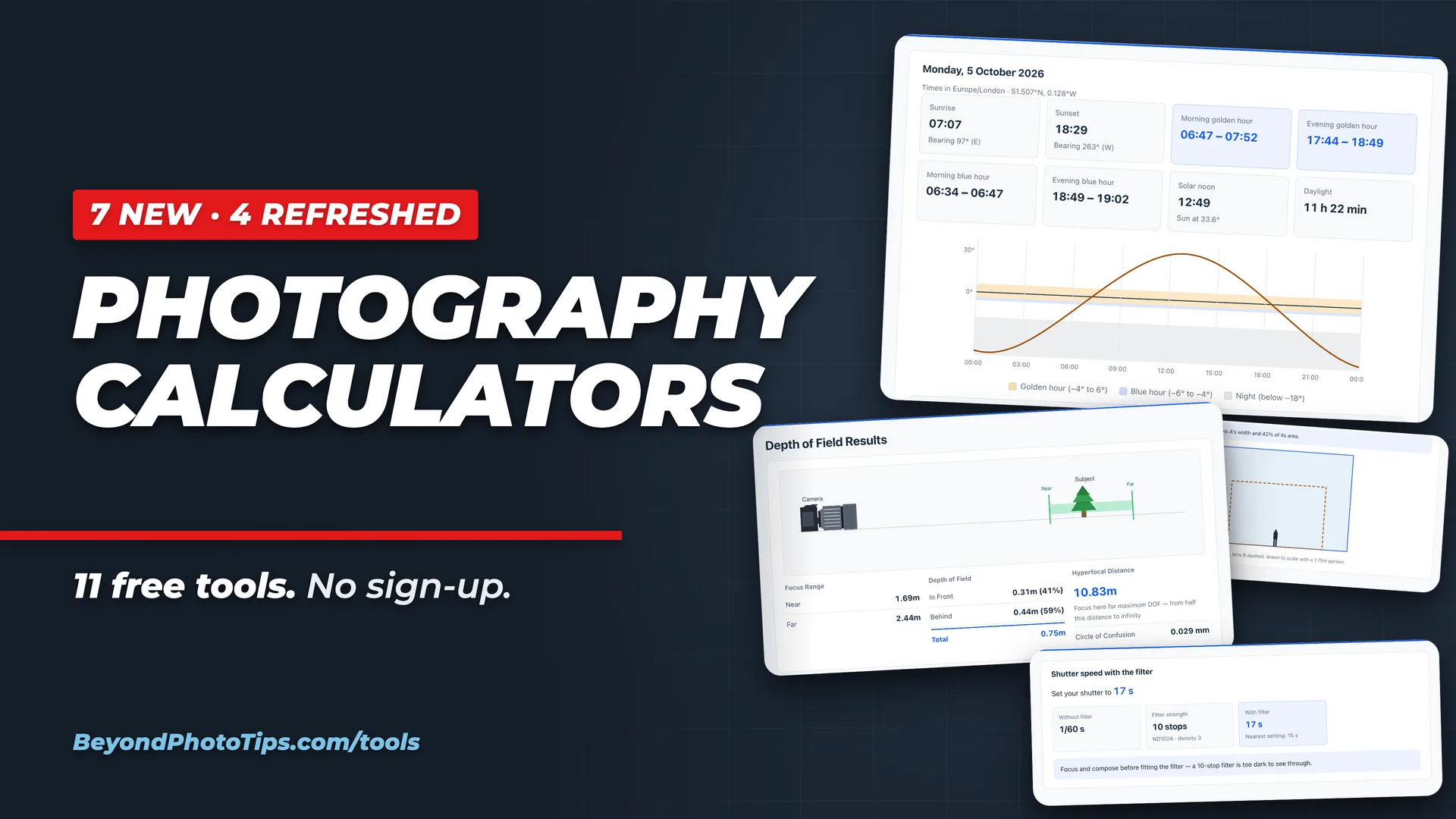
Photography Calculators: Seven New Tools and a Refresh for the Originals
Our free photography calculators have grown from four to eleven: field of view, golden hour, astro, time-lapse, macro, ND filter and flash, plus refreshed originals.

Sony A7 V Overview: The Hybrid Camera Perfected?
Announcement and Specifications of the Sony A7 V Hybrid mirrorless camera.
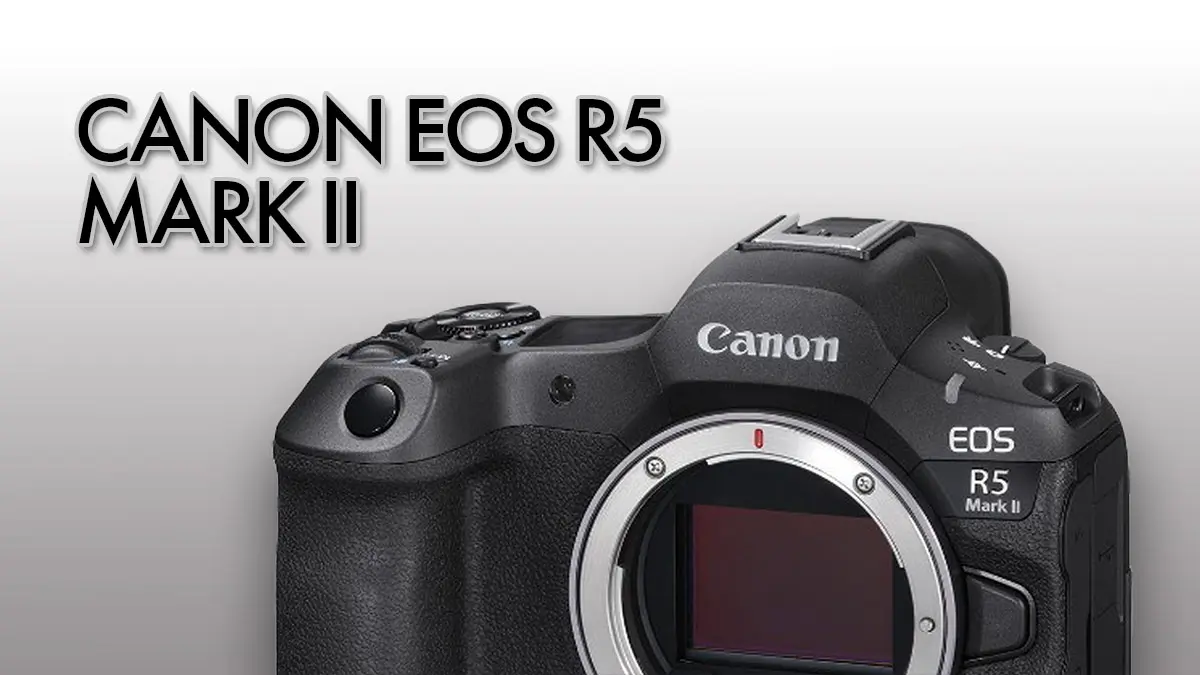
Canon EOS R5 Mark II Specs
Canon announced their update to the EOS R5, the EOS R5 Mark II today. As expected, the specs are a step up from the original R5. The sensor size is the same, though it is a new sensor with higher readouts. The Auto-Focus…
Link Roundup #001
Welcome to Beyond Photo Tips' very first photography link roundup. In this brand new series of weekly posts, we are going to bring you, a glimpse of everything that we found interesting in the week gone by.