
The Best Lenses for Sports Photography & How To Choose
This post contains affiliate links. If you buy through them we may earn a commission, at no cost to you. As an Amazon Associate I earn from qualifying purchases. Learn more.
Table of Contents
- What Properties Does a Sports Photographer Want in Their Lenses?
- Focal Length Choice for Sports Photography
- Why Use Super-Telephoto Lenses?
- Should I Use a Zoom or a Prime Lens for Sports?
- Why Use A Zoom Lens for Sports Photography?
- Why Use A Prime Lens for Sports Photography?
- Aperture Requirements for Sports Photography Lenses
- Sports Photography at Night
- Image Stabilisation For Sports Photography Lenses
- Wide-Angle Lenses For Action Photography
- Choose The Best Full-frame Lens For Sports Photography!
- Shooting with a DSLR?
- Canon RF Mirrorless Lenses for Sports (Full-Frame)
- Professional / No-Compromise
- Enthusiast / High Value
- Budget
- Sony FE Mirrorless Lenses for Sports (Full-Frame)
- Professional / No-Compromise
- Enthusiast / High Value
- Budget
- Nikon Z Mirrorless Lenses for Sports (Full-Frame)
- Professional / No-Compromise
- Enthusiast / High Value
- Budget
- Fuji X Mirrorless Lenses for Sports (APS-C)
- Third-Party Lenses for Sports (Sigma and Tamron)
- Sigma
- Tamron
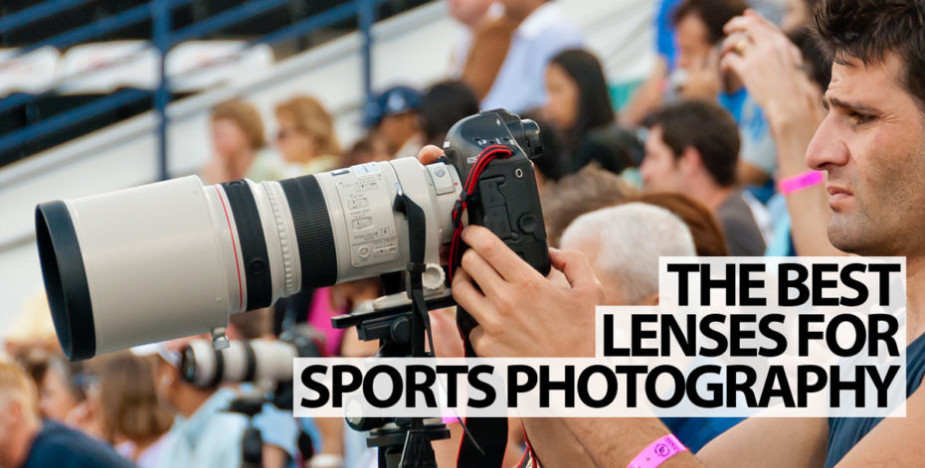
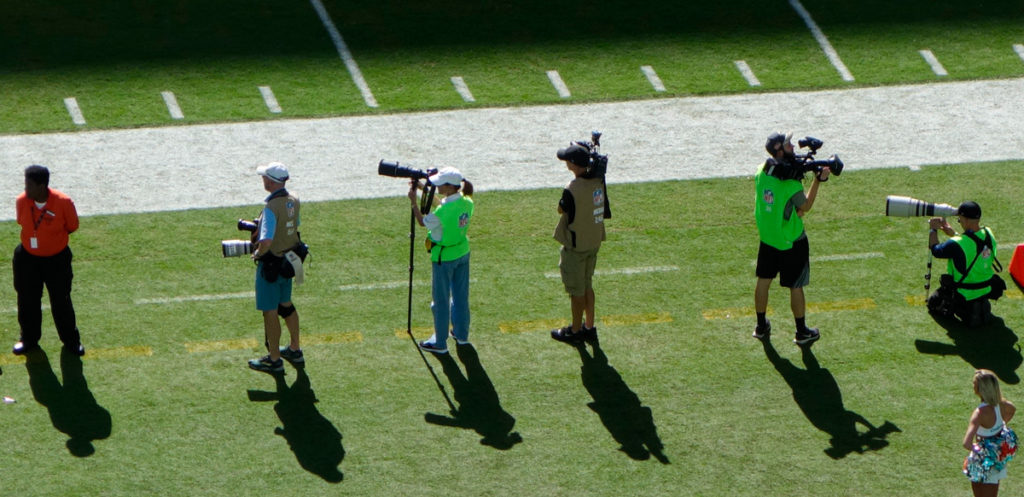
You’ve seen sports photographers on the sidelines of every sports event - with massive lenses supported by monopods. You’ll see them there in almost any kind of weather… Waiting to capture a perfect moment - one that distils the essence of the sport, and that also captures the action, in a vital moment for the athletes involved.
The lenses selected for sports photography have a very specific function in helping them to capture these fleeting, and rare moments. Let’s look at those lenses and the real reasons why photographers choose to, (and need to) use these lenses. We will also look at why shorter focal length lenses are not appropriate for photographing sports events… I deal with all this, in the three sections of this article about Sports Photography.
In general, sports photographers choose to use long focal-length lenses with wide apertures. The specific focal length, and whether they choose a prime lens or a zoom lens may change based on which sport they are photographing, and where they’re taking photographs from.
In this article, I hope to help you understand why they make those choices as well as to provide you with some options for the best lenses to pick for sporting events.
What Properties Does a Sports Photographer Want in Their Lenses?
Sports photography equipment requirements can be distilled down to the following:
- Ability to capture fast-moving objects as if they were frozen in time… Frozen sharp, and with correct focus.
- Fast reactions and adaptability (high shutter speeds, large apertures, and extremely fast focusing)
- High sensitivity to changing scenarios (varied focus features, and optical image stabilisation)
- Extreme Reliability in extreme conditions (it may be raining, snowing, or very dusty in the sports arena, but the lens must perform regardless of this)
Aren’t these attributes rather similar to the athletes that these photographers photograph?
Click here to get to the suggestions immediately.
Focal Length Choice for Sports Photography
Outdoor sports events usually call for telephoto or super-telephoto lenses; more often Super-telephoto than plain telephoto lenses are used in sports and action photography.
Super-telephoto lenses are generally lenses with a focal length of more than 300mm. These sports lenses would have to have large apertures to allow the photographer to capture images with fast shutter speeds and no additional lighting.
If you’ve ever tried photographing a soccer event you’ll know why these photographers use these lenses. A moderate telephoto lens of 70mm or 135mm will give you a rather wide view when photographing a player on the other side of the field and will show you almost nothing of interest if you’re photographing from near the opposite goal post.
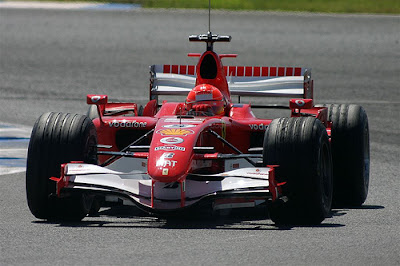
Additionally, it’s usually difficult and/or dangerous to get too close to some of the action. Imagine having to sit 10 feet away from a racetrack to get frame-filling pictures of Formula 1 cars with a medium-length telephoto lens! Both dangerous and impractical… Yet, sports photographers may do this to get the shot.
Why Use Super-Telephoto Lenses?
600mm, 800mm, and 1,200mm lenses help magnify the players/drivers so that they fill up the frame and bring all the gritty action right up into the photograph. This is why a super-telephoto lens comes into play… To get you close to the action, even though you’re far away.
Also, if you want to capture the speed of the cars you can use a relatively slow shutter speed and pan your camera to blur the background; Impossible if you are too close.
Should I Use a Zoom or a Prime Lens for Sports?
While zoom lenses are often used for action shots, both prime and zoom lenses have a place in the sports photographer’s camera bag. Each type of sports photography lens gets used when appropriate.
The decision to use one over the other comes with experience, and with a developed style. Beginners will do well to pick zoom lenses over prime telephoto lenses, because they are easier to work with.
Why Use A Zoom Lens for Sports Photography?
Sports photographers have to deal with a constantly changing environment. Very often incidents occur so fast that it’s not possible to change a lens. Zoom lenses are invaluable at these times. Imagine being able to frame a racecar 200 feet away one moment and the next swivel around to take a photograph of a car crash happening 30 feet away and then a portrait of a distressed driver as he walks past you, all without having to change your lens once!
The Sigma 60-600mm f/4.5-6.3 DG DN OS Sports lens could enable you to do just that! In exchange for greater flexibility, you have to contend with a smaller (varying) aperture, which means a dimmer viewfinder image in a DSLR.
Why Use A Prime Lens for Sports Photography?
Super-telephoto lenses are very specialised lenses ranging in focal length from 400mm to 1200mm. Their optical design is very complicated. This is why you will find more prime lenses than zoom lenses at this end of the focal length spectrum.
Prime lenses offer superior image quality to zoom lenses because they are designed optimally for a particular focal length while zoom lenses strive to offer decent quality at all focal lengths.
Prime lenses also offer large apertures that are completely essential for freezing action. Large apertures also mean that the image in the viewfinder is brighter, helping photographers to see small objects and details better even if they are shooting at smaller apertures.
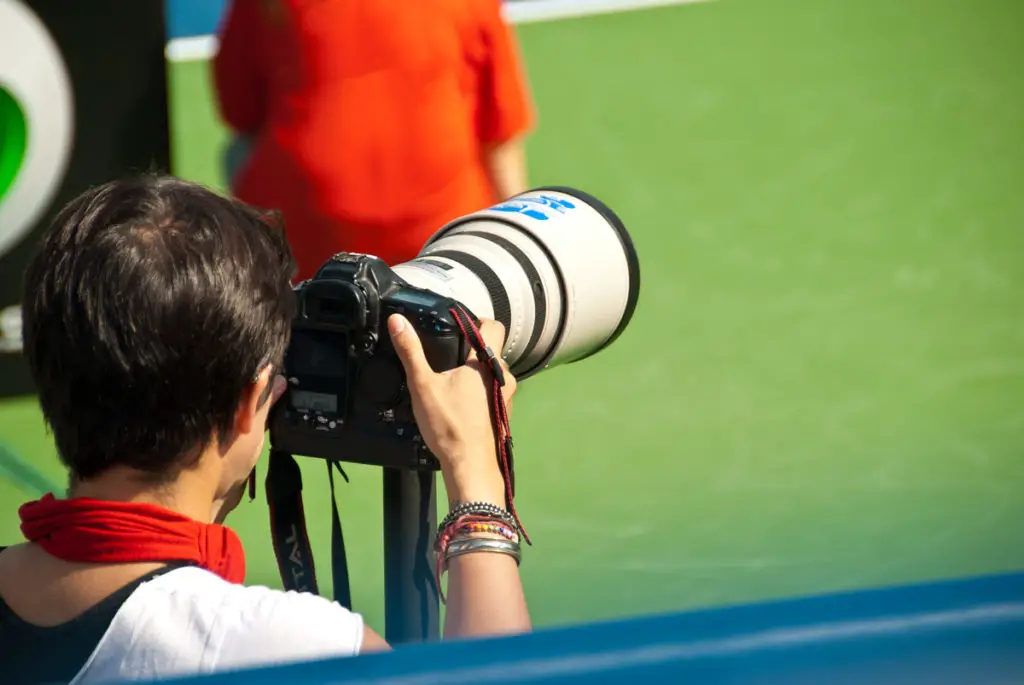
The image below here shows a Sports Photographer using the Canon EF 300mm f/2.8 L lens at the Dubai Tennis Open. It’s massive compared to an enthusiast or hobbyist-grade 300mm lens!
Aperture Requirements for Sports Photography Lenses
Capturing fast movement in one great shot, frozen in time, means that often photographers will need shutter speeds that are 1/500, 1/1000 sec or higher. Most sports events are held in relatively well-lit areas during the day, but at night, even the brightest floodlights are a poor substitute for the sun. This means that sports photographers need to use fast telephoto primes that are often used at f/2.8 or so.
Sometimes, even in bright sunlight, the photographer may choose to use a large aperture to blur out the background. This keeps the action alone in focus, blurring out a distracting background. This separation of the sports action from a cluttered background is one of the defining features of large-aperture telephoto lenses, and one of the defining features of great sports action photography.
Lenses with larger apertures generally perform better at two levels, apart from letting in more light and allowing faster shutter speeds:
- They focus faster and more accurately, even in low light.
- They have a higher level of sharpness at their intermediate apertures.

Sports Photography at Night
The sun may go down, the action may move indoors, or under lights, but the fun goes on. Sporting events continue late into the evenings and often are started at night when the atmosphere is cool or for primetime scheduling reasons.
Large apertures are even more important when it comes to night, and low-light situations. Light levels are bound to be lower while the action and movement still requires a fast shutter speed.
Of course, you may compensate by increasing your ISO settings, but not everyone is willing to pay for the trade-off with higher noise levels.
In this situation, larger apertures also offer the sports photographer an added advantage of a brighter image in the viewfinder, thus making it easier to get better framing and composition.
Today, mirrorless cameras with electronic viewfinders take the place of optical viewfinders, quite often. Extremely sensitive full-frame sensors like those on the Sony A9 III and the A7S III, make noise and image brightness less of a concern, but larger apertures are still critical to success in Sports Photography.
Image Stabilisation For Sports Photography Lenses
Image Stabilisation (IS), Vibration Reduction (VR), and Optical Steady Shot (OSS) are Canon’s, Nikon’s, and Sony’s terms for their proprietary shake and movement reduction technologies.
Many of their lenses are now equipped with these technologies, making it inevitable that we take a look at them. I’ll use the term ‘Shake Reduction’ to refer to these technologies though I prefer the term “Image Stabilisation”.
Shake Reduction technology can mean the difference between a razor-sharp and blurred picture at the same shutter speeds or the difference between the ability to hand-hold a lens for a photograph that would otherwise have to be tripod-mounted. These lenses are large and heavy; coupled with a full frame professional digital camera the combination can get quite heavy to hold perfectly still without support.
Some older lenses of this genre do not perform well on tripods and instead introduce shakes where there is none. Others have a panning mode for tripod-mounted use, and correct shake only on one axis.
Shake Reduction does not fix all your shake problems; rather, it helps you increase your efficiency. If used well, it can be used to really push the limits of hand-held photography.
Wide-Angle Lenses For Action Photography
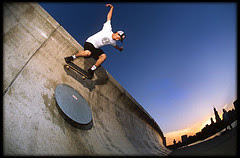
Wide-angle lenses are not practical for most live sports applications. However, if you’re photographing a relatively low-impact sport (where damage to the photographer is ‘relatively’ low in a worst-case scenario), say skateboarding or roller-blading for instance, you could use these lenses for great effects.
Most sports photographers will also make it a point to carry wide-angle zooms so that they can capture images that convey the environment, the location, and the audience at any sporting event. These are often as important as the sporting event itself.
Choose The Best Full-frame Lens For Sports Photography!
Here we have a list of some of the best lens choices for action and sports photography.
Shooting with a DSLR?
Canon EF and Nikon F-mount lenses are no longer in active development, but many excellent options remain available on the market, both new and used. If you shoot Canon EF, the EF 100-400mm f/4.5-5.6L IS II USM and EF 70-200mm f/2.8L IS III USM remain outstanding sports lenses. Nikon shooters should look at the AF-S 200-500mm f/5.6E ED VR and AF-S 70-200mm f/2.8E FL ED VR zoom lenses. Both Canon and Nikon’s EF and F-mount lenses work on their respective mirrorless bodies with adapters (Canon EF-EOS R adapter, Nikon FTZ II adapter) with full AF support.
Canon RF Mirrorless Lenses for Sports (Full-Frame)
Professional / No-Compromise
| Lens | Notes | Link |
|---|---|---|
| RF 100-300mm f/2.8 L IS USM | NEW. The ultimate indoor/outdoor sports zoom. f/2.8 across the range with 1.4x and 2x TC support, giving you 140-420mm or 200-600mm reach. Replaces multiple primes for working pros. Expensive but unmatched versatility. | Amazon |
| RF 70-200mm f/2.8 L IS USM | The workhorse telephoto zoom. Covers sideline work, indoor sports, and closer-range outdoor events. Compact for its class. | Amazon |
| RF 400mm f/2.8 L IS USM | For pro sideline work at outdoor field sports. The classic “big white.” Supports 1.4x and 2x TCs. Five-figure price. | Amazon |
| RF 600mm f/4 L IS USM | NEW. Maximum reach with a fast aperture. Stadium and track sports where 400mm isn’t enough. Supports TCs. Also five figures. | Amazon |
Enthusiast / High Value
| Lens | Notes | Link |
|---|---|---|
| RF 100-500mm f/4.5-7.1 L IS USM | Best all-around sports zoom for Canon. Huge range, L-series build, reasonable weight. The variable aperture limits low-light work, but outdoors it’s superb. | Amazon |
| RF 200-800mm f/6.3-9 IS USM | NEW. Extreme reach in a single zoom. Best for outdoor daylight sports where you need to fill the frame from far away (track and field, motorsport, cricket). Slow aperture means it struggles in low light. | Amazon |
| RF 70-200mm f/4 L IS USM | Budget alternative to the f/2.8. One stop slower but significantly lighter and cheaper. Good for well-lit outdoor sports. | Amazon |
Budget
| Lens | Notes | Link |
|---|---|---|
| RF 100-400mm f/5.6-8 IS USM | Affordable telephoto reach. Not fast enough for indoor sports, but a solid entry point for outdoor daytime events. | Amazon |
| RF 600mm f/11 IS STM | Fixed f/11 aperture. Usable only in bright daylight, but offers 600mm reach at a fraction of the cost. Good for learning. | Amazon |
| RF 800mm f/11 IS STM | Same concept as the 600mm but longer. For outdoor sports where you’re very far from the action. Bright light only. | Amazon |
Sony FE Mirrorless Lenses for Sports (Full-Frame)
Professional / No-Compromise
| Lens | Notes | Link |
|---|---|---|
| FE 50-150mm f/2 GM | NEW. World’s first f/2 telephoto zoom reaching 150mm. Exceptional for indoor sports, basketball, volleyball, close-range sideline work. Replaces multiple primes. No TC support. $3,899. | Amazon |
| FE 70-200mm f/2.8 GM OSS II | NEW (replaces Gen 1 in the article). Significantly lighter and sharper than the original GM. The standard sports telephoto. 30% lighter than its predecessor. | Amazon |
| FE 300mm f/2.8 GM OSS | NEW. Sony’s first “big white” super-telephoto prime. Fast AF, lightweight for its class, TC compatible (420mm at f/4 or 600mm at f/5.6). Released 2024. | Amazon |
| FE 400mm f/2.8 GM OSS | For working pros. TC support extends to 560mm or 800mm. The Sony equivalent of Canon/Nikon big whites. | Amazon |
| FE 600mm f/4 GM OSS | Maximum reach with fast aperture. Stadium and track work. TC compatible. | Amazon |
Enthusiast / High Value
| Lens | Notes | Link |
|---|---|---|
| FE 200-600mm f/5.6-6.3 G OSS | NEW. One of the best value super-telephoto zooms on any system. Internal zoom (fixed length), excellent AF, great for outdoor sports. The go-to recommendation for most Sony sport shooters. | Amazon |
| FE 100-400mm f/4.5-5.6 GM OSS | Versatile range, lighter than the 200-600. Good for sports where you need to quickly shift between mid and long telephoto. | Amazon |
| FE 70-200mm f/4 Macro G OSS II | NEW. Budget alternative to the f/2.8 GM II. One stop slower but very compact and sharp. Good for well-lit outdoor sports. | Amazon |
Budget
| Lens | Notes | Link |
|---|---|---|
| FE 70-300mm f/4.5-5.6 G OSS | Affordable telephoto with decent range. Not fast enough for indoor sports, but a good starting point for outdoor events. | Amazon |
Nikon Z Mirrorless Lenses for Sports (Full-Frame)
Professional / No-Compromise
| Lens | Notes | Link |
|---|---|---|
| Z 70-200mm f/2.8 VR S | The Nikon workhorse sports telephoto. Excellent AF, sharp, weather-sealed. | Amazon |
| Z 400mm f/2.8 TC VR S | NEW. Built-in 1.4x teleconverter gives you 400mm f/2.8 and 560mm f/4 in one lens. A game-changer for Nikon sports pros. | Amazon |
| Z 600mm f/4 TC VR S | NEW. Same built-in TC concept. 600mm f/4 and 840mm f/5.6. Nikon’s flagship super-telephoto. | Amazon |
Enthusiast / High Value
| Lens | Notes | Link |
|---|---|---|
| Z 100-400mm f/4.5-5.6 VR S | Versatile telephoto zoom with excellent optics. Good for outdoor field sports and motorsport. TC compatible (140-560mm with 1.4x). | Amazon |
| Z 180-600mm f/5.6-6.3 VR | NEW. Nikon’s answer to the Sony 200-600. Internal zoom, massive range, great value. One of the best “reach on a budget” lenses in any system. | Amazon |
| Z 400mm f/4.5 VR S | Compact super-telephoto prime. Lighter and cheaper than the f/2.8. Good for sports shooters who want prime quality without the weight or cost. TC compatible. | Amazon |
Budget
| Lens | Notes | Link |
|---|---|---|
| Z 24-200mm f/4-6.3 VR | Travel superzoom. Listed for completeness, but only suitable for well-lit outdoor sports where you’re close to the action. Not a dedicated sports lens. | Amazon |
| Z 800mm f/6.3 VR S | Long but relatively affordable for its reach. Outdoor daylight sports only. TC compatible for 1120mm or 1600mm (if you dare). | Amazon |
Fuji X Mirrorless Lenses for Sports (APS-C)
NEW SECTION. Fuji’s X-system is APS-C, so all focal lengths have a 1.5x crop factor. A 150-600mm lens gives 225-900mm equivalent field of view. The Fuji X-H2S is popular with sports shooters for its fast burst rate and excellent AF tracking.
| Lens | Notes | Link |
|---|---|---|
| XF 50-140mm f/2.8 R LM OIS WR | The Fuji equivalent of a 70-200mm f/2.8. Fast, sharp, weather-sealed. The baseline sports lens for Fuji shooters. (75-210mm equivalent) | Amazon |
| XF 100-400mm f/4.5-5.6 R LM OIS WR | Versatile super-telephoto zoom. (150-600mm equivalent) Good for outdoor field sports. Supports Fuji’s 1.4x and 2x teleconverters. | Amazon |
| XF 150-600mm f/5.6-8 R LM OIS WR | Extreme reach. (225-900mm equivalent) For sports where you’re very far from the action. Slow aperture limits it to bright daylight. | Amazon |
Third-Party Lenses for Sports (Sigma and Tamron)
NEW SECTION. These lenses offer excellent value and are available across multiple mount systems. Note: as of early 2026, Sigma and Tamron do not yet make full-frame autofocus RF-mount lenses. Canon RF shooters can use Sigma and Tamron EF-mount lenses with Canon’s EF-EOS R adapter.
Sigma
| Lens | Mounts | Notes | Link |
|---|---|---|---|
| Sigma 150-600mm f/5-6.3 DG DN OS Sports | Sony E, L-mount | Purpose-built for mirrorless. Excellent optics, Sports-line build quality, weather sealed. Supports Sigma 1.4x and 2x TCs (L-mount). | Amazon |
| Sigma 60-600mm f/4.5-6.3 DG DN OS Sports | Sony E, L-mount | NEW. 10x zoom range. Go from environmental context shots to tight action without changing lenses. Ideal for unpredictable sports like airshows or multi-event track meets. | Amazon |
| Sigma 100-400mm f/5-6.3 DG DN OS Contemporary | Sony E, L-mount, Fuji X | More affordable and lighter than the 150-600. Good entry point for outdoor sports telephoto. | Amazon |
| Sigma 70-200mm f/2.8 DG DN OS Sports | Sony E, L-mount | NEW. Third-party alternative to first-party 70-200mm f/2.8 lenses. Strong optics at a lower price point. | Amazon |
Tamron
| Lens | Mounts | Notes | Link |
|---|---|---|---|
| Tamron 150-500mm f/5-6.7 Di III VC VXD | Sony E, Nikon Z, Fuji X | Lighter and more compact than the Sigma 150-600. Faster AF, arguably better for tracking fast action. Less reach, but excellent value. | Amazon |
| Tamron 50-400mm f/4.5-6.3 Di III VC VXD | Sony E | NEW. Unique range that covers everything from standard to super-telephoto. Not the fastest, but incredibly versatile for a single-lens kit at multi-sport events. | Amazon |
The above lists are suggestions, and the links are to affiliate sites where you can look up their specs, and make a purchase if you wish. Clicking the links does not add to your expense, but helps us to keep this site going. Do consider using these links if you want to support us.
You can also find out more about lenses for different kinds of photography at The Lens Buyer’s Guide post.
Related Posts

Why Silica Gel Sucks! What To Use Instead For Camera Storage
Using Silica Gel for camera & lens storage is tedious. Use a Dry Cabinet instead!

What Is Silica Gel? How Does It Work?
What is Silica Gel, find out all about it, how it removes moisture from the air, and keeps your electronics and camera lenses safe from fungus & mold.

Is Silica Gel Toxic? Myths Busted
Silica Gel is a non-toxic, non-poisonous dessicant/adsorbent material. It is safe to use in electronics and camera cases. Is Silica Gel Toxic? No!

Using a Trackball For Image Editing... Madness?
You thought we left the roller-ball mouse behind in the early 2000s when optical mice started becoming popular, but then, there's this article that you're reading about using a trackball to edit your images. Surely, you…
3 Comments
Comments are closed.
Paul
I have been following this series of articles - excellent work, each one a good read.
-
momentography
What happened to the venerable Nikon 80-200mm f/2.8? That should be at the top of the list!
Susheel
@ Paul: Thank you for your encouraging comment. I appreciate it.
@ Momentography: You're right! Thank you for pointing out its exclusion. I've added it to the list.