
Interview with Suchitra Vijayan: Lines of Grey

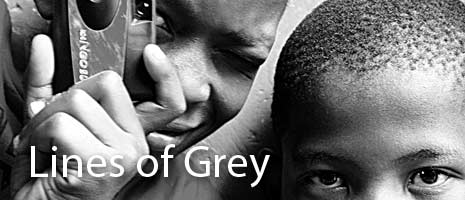
I’ve had the opportunity to interview Suchitra Vijayan, founding member of Lines of Grey, an NGO which helps street children find a means of expression. Lines of Grey gives the children disposable cameras and asks them to take pictures of things that influence their lives… or just to take pictures. The goal is to experience the world through their lens, and not the lens of someone who comes to that part of the world just to take photographs.
Here’s what she had to say about a variety of topics, including their recent exhibition of photographs at the British Council lifestyle lounge.
Susheel: What is Lines of Grey? What does the name signify?
Suchitra: Lines of Grey is an NGO that seeks to take photography to the doorsteps of marginalised children in communities around the world. Our NGO is founded on the belief that “Every Child is an Artist”.
To answer why “Lines of Grey “ I need to talk about my fascination with the colour Grey. This goes back to my own love affair with black-and-white photography. Like all great love affairs, it started with this heady feeling of getting the wind knocked out of me and I was in an expedited hurry to learn and discover everything there was to know about this medium. In that process, I came to understand this subtle but complexly layered colour called “Grey”. Grey is an achromatic colour between white and black that exists in a state of great lightness, caught between the lighter side of black and the darker side of white. Lines of Grey represent the street children who are a part of this project; each shade with its complex mixture of shadows, highlights and mid-tones. They are the product of economic and social injustice that is rampant in this world. These children are prisoners of prejudice, social attitudes and numerous negative associations. Just like the shade Grey, these children live on the marginalized edge of extremes. They are the existing reality and a beautiful abstraction.
Susheel: How did you get the inspiration/idea for Lines of Grey?
Suchitra: In early 2007, I was at a point where I felt frustrated with my own growth as a photographer and often had a nagging feeling that I was photographing clichés. This sense of unrest translated into a conversation with a friend of mine, where we discussed how images of the third world often portray poverty and misery, and the people who tell their story are often people who have ever experienced the circumstance themselves first-hand. Our conversation shifted to the Tsunami victims and we wondered what would the children and the people affected by this crisis photograph? This thought process was the beginning, “How would the afflicted photograph their stories ? What would they photograph? How would they choose to tell their stories?”. This was around the time when I was leaving for Tanzania and even before I left, I decided to experiment with this concept. Lines of Grey was born as a result of that curiosity.
Susheel: Why did you pick photography as the medium of expression, and not one of the other creative media such as painting, writing, poetry or song?
Suchitra: Two reasons actually. First, photography is personal to me. Photography is a medium that I grew up with and it was easier to work with a medium that I was familiar with. Second, photographs possess the power to shock or to idealize, they create in us a sense of nostalgia and act as a memorial. They can be used as evidence or to identify us. Images affect the way we view the world and rely upon them to create our own reality of the world we have never experienced. In this context, photography is an ideal way of bringing to the world’s attention the inescapable act that children have a unique perspective. Whether children grow up in luxury, on the cold urban streets or in a denuded rural area, their take on life reflects a world in which hope is the primary element.
Susheel: Doesn’t photography have a rather steep learning curve? How do the children deal with it?
Suchitra: Children are motivated by humour and play. The philosophy at Lines of Grey is to let the children have fun and enjoy the process of learning through artistic discovery. Children are excited about the process of capturing what is around them, rather than learning they place emphasis on documentation. I don’t think the children are consciously aware of this learning curve.
Susheel: The equipment used must have been rather simple, can you specify what you used for our more technically inquisitive readers?
Suchitra: We used Kodak Disposable cameras the first time around and now we use Kodak KB - 10.
Susheel: Your exhibition at the British Council in Chennai was a great success. Is this the first exhibition that you’ve conducted?
Suchitra: Yes
Susheel: For those of our readers who are thinking of showing their work publicly, what experiences do you have to share with us about putting together an exhibition of photographs?
Suchitra: Get your ideas together. Clarity of thought is essential. Invest time in what you want to showcase, how you want to do it and what you intend to gain from the whole experience. Get your technical details right, how to frame, and what size. What works with what. Talk to people, discuss your thoughts. Think of permutations. This process helps to iron out the creases and fill gaps in your ideas. Start early, this is essential. In situations like this, Murphy’s Law will set in right at the moment you start planning. Give time for last-minute mishaps.
Ask. This is your chance to ask the dumbest questions. It’s ok not to know. Sometimes the easiest thing to do is to ask others. Finally, have fun and enjoy the process. When faced with passion, talent is a very poor competitor. If a lawyer can pull off a photography exhibition, anyone can :D
Susheel: Most of the work on display was not your own. How did you select the pieces that you finally showed? Was there any particular criteria?
Suchitra: Photography is very personal, what appeals to one might not to others. I picked the first set of images that appealed to me. Then took it to other members of the Lines of Grey team. We narrowed it down to 20 images. We tried to have an eclectic mix. That would encompass the range of subjects and images the children had shot. There was no one formula that we followed, if there was one it was to put the best images forward.
Susheel: What is Lines of Grey’s most recent endeavour? When can we see the results?
Suchitra: Our recent work is with 10 girls from the Government Juvenile Centre for girls in Purasaiwalkam. We just started the project and got the first set of contact sheets. The results will be out in the next couple of months.
Susheel: Your photographs of the children at Arusha are often from the perspective of a person in communication with the children, thereby making the viewer feel the same communication. The pictures are also very “natural”. How do you manage to keep the children from feeling self conscious?
Suchitra: I spent over 6 months in Arusha and at least a couple of days a week with the children. I think it is about the comfort level that we shared with each other. Children have a natural flare in front of the camera.
Since the children themselves were experimenting with photography they understood the process of looking through the lens. That could have been the reason why they weren’t conscious.
Susheel: When it comes to photography, do you bother a lot about the knobs and buttons on the camera, or do you just go at it in “auto”?
Suchitra: Photography is reflexive to me, I don’t know the rules, so I don’t know if I have broken them. I think I am somewhere in between. So sometimes it’s in the auto mode and sometimes its settings am familiar with.
Susheel: Can you share with us some of your sources of inspiration in photography?
Suchitra: The list keeps changing of course. I don’t call it inspiration, I call it obsessions. I go through phases where I am obsessed with a certain photographer and I read up almost everything about that photographer: skill, technique, style, mood, and stories behind their greatest work.
For a long time, it was Salagado. Then there was this time when I was smitten by Koudelka. E.J. Bellocq followed. Currently, I am obsessing over Nachtwey.
Lines of Grey is an ongoing effort to improve the lives of children through photography. If you would like to learn more, Visit the Lines of Grey website. The photographs taken by the children at Arusha can the viewed on the Gallery page. The gallery also has short essays written by the children, some of which are soul-touching.
There are also pictures of the children taken by Suchitra. You can also Donate Money or Books, Sponsor a Child’s education, Help raise funds, or write a blog post to help support their cause.
Related Posts

The Rise, And Fall, Of Adobe?
Many of us use Adobe tools regularly. I’ve used them since 1995, and I still do. But there was a time, a few years ago, when I was very frustrated with Adobe, and that I moved away from the Creative Cloud ecosystem. In…
Watch Videos for a Long and Prosperous Life...
Yes, I promise you... it's a good thing! Especially when they're videos that help you learn stuff... Here's a great video of Chase Jarvis' talk at the New York Photo Shelter get-together thingie... Now, I couldn't quite…

How NASA Astronauts Capture Photographs in Space
Scott Manley tells how the passion of some astronauts to capture their space flights on camera have progressed camera development for everyone

Photography Related Sites Hacked! Here's How To Secure Your Passwords Today
You need better passwords to keep your accounts safe; and you need to keep your passwords safe too. You can use a password manager to handle all this.