Beyond Phototips

Avatar

Photography for the Serious Amateur.

Symmetry – A User’s Guide

by Susheel Chandradhas

So, we’ve got a project about SYMMETRY, but just what is symmetry?

Does it just mean a ‘reflection’ of what you see on one side? Here’s a bit more info to help guide the way you look at the world and take photographs for the project.

Now, symmetry in mathematics, physics, geometry and aesthetics has a number of definitions, but lets keep it simple.

The kind of symmetry that we’re most accustomed to is “Reflection”. Along with reflection, the four kinds of symmetry that we most commonly deal with are:

  • Reflection Symmetry
  • Rotational Symmetry
  • Translational Symmetry
  • Glide Reflection Symmetry

Reflection Symmetry

Three on the ride
Photo By: Jsome1

Reflection is what you see in a mirror. The regular layman’s understanding of the word reflection… If a line were drawn (usually vertically) through the axis of the symmetry, each feature or point on one side would be equally distant on the other side of the axis.

Rotational Symmetry

Example for rotational symmetry
Photo By: Retinafunk
Another example for rotational symmetry. radial lines out of a lantern
Photo By: cotaro70s

Rotational Symmetry is what you see when a shape or pattern is rotated around a point (also called the origin). To observe it, take a look at earthen pottery or even just a circular plate.

Translational Symmetry

Translational symmetry
Photo By: *Solar ikon*
stairs (tv-tower)
Photo By: POSITiv
* Diamond Pattern Satin Fabric Texture *
Photo By: pareeerica

Translational Symmetry is simple to show, but a little complicated to explain. It is as if an object has been slid along a plane. It is not flipped, or rotated about an axis; rather it is as if a duplicate of the object has been created.

Glide Reflection Symmetry

I Went Out Walking...
Photo By: Matt McGee
Footsteps In Sand
Photo By:  Ryan Holst

A good example of Glide Reflection Symmetry are animal tracks, or human footprints in sand. They are seemingly reflected, but also displaced along the axis.

Wikipedia lists other interesting forms of symmetry, and I encourage you to visit the page for more descriptive explanations. I find Scale Symmetry and Fractals to be of particular interest.

As always, feel free to leave a comment and let me know if you found this useful.

Share this Phototip:
  • Digg
  • del.icio.us
  • StumbleUpon
  • Facebook
  • Twitter

Photo Project: Symmetry

by Susheel Chandradhas

In order to take you photography to the next level, there are some things that you must consider. Photography is a skill; but at some point that skill must be overcome by aesthetic considerations in order to be considered ‘art’. Lets start off with a simple project. One that everyone could take part in, that will help you develop your photographic eye, and help you stock up your photographic bag of tricks.

Symmetry

Symmetry is a key element of nature itself, and more importantly to us, in man, and his creations. In your composition, and in your subject, symmetry brings out simplicity amongst complex shapes, and makes things easier to understand.

Symmetry is everywhere. It is when you look at a perfect square, or a bar of chocolate, when you push all your chairs in at your dinner table, or when you look at a racing car. You see it in your architecture, in domes, in arches, in staircases and in doors. You see it in your computers and cellular phones. It is possible that it also makes things more beautiful to behold, and is hard to ignore once you start looking around… Symmetry is everywhere.

Symmetry is not always the best choice for a subject though, and knowing when to use symmetry to enhance the features of the subject, or the subject of your photograph is something that comes with practice and a critical eye.

Take Part – Show off your Symmetry

To be part of the Photo Project, take three photographs with the theme ’symmetry’ kept in mind. Upload them to Flickr, and add them to the Beyond Phototips Flickr Group with the tag “BPP-symmetry“.

10 days from now, I’ll pick at least one photograph from every participant’s submissions and post them all up here on Beyond Phototips for everyone to see. So be on your toes, and think before pressing that shutter-release button. You don’t want to be showing off anything but your best work, right?

If  you find the process interesting, why not write about it and put it up on your blog so that others can benefit too? If you’ve got any thoughts to share, but just want to jot them down quickly, do leave a comment at the bottom of this post.

Some Examples of Symmetry in Photography

Not all books are burned

Creative Commons License photo credit: Netream

wall & doors

Creative Commons License photo credit: goandgo


Share this Phototip:
  • Digg
  • del.icio.us
  • StumbleUpon
  • Facebook
  • Twitter

Steady that Point ‘n’ Shoot

by Susheel Chandradhas

Point and Shoot cameras are notoriously difficult to keep steady in low light situations. Here are a couple of tips that should help you steady your swaying forearms when taking these photographs.

1. Don’t use the LCD display.

Using the LCD display to compose your photographs is possibly the easiest way to shoot with a digital Point ‘n Shoot, and yes, they dont make the viewfinders the way they used to. But low light conditions are not the best situation to test your forearm stability.

Squash your eye against that viewfinder, and peer into that little glass lens. Doing this supports the camera, and it’s less susceptible to sway (unless you’re drunk).

2. Brace yourself

Steady yourself by leaning against a rigid structure such as a wall or concrete post. Put your back against it, press as much of your body into it as possible. This should get you ready for your low-light hand-held point and shoot photograph.

You could also use a wall, chair or any other appropriate support to rest your camera or hands on when taking the photograph.

3. Slow n Steady…

Remember that this is not a race, the marines have a motto that they follow “slow is smooth, and smooth is fast”. This is true here too. If you’re in less of a hurry to take the photograph and move away, you’re more likely to keep the camera steady and in-position longer. This will give you a steady, shake-free photograph and absolutely no need to take another photograph.

4. Squeeze the ‘trigger’ don’t press

Since photographers use similar terminology (e.g.: I’m going outside to shoot some brilliant photographs), I’m quoting a Firearms guide. Use the same priciples when squeezing your shutter release. It works; no matter whether you’re using a point and shoot or a D-SLR.

Poor shooting is caused by the aim being disturbed before the bullet leaves the barrel of the weapon.  This is usually the result of the shooter jerking the trigger or flinching. Jerking is an effort to fire the weapon at the precise time when the slights align with the target, and flinching is a reflex caused by anticipating recoil.

Trigger squeeze is the independent rearward movement of the trigger finger without disturbance of the sight alignment until the weapon fires.  First, the slack in the trigger is taken up.  You will then hit the break point of the trigger.  Continue applying steadily increasing pressure until the weapon fires.  If the trigger is squeezed properly, you will not know exactly when the weapon will fire; thus, you will tend not to flinch or jerk.

- FirearmsPrimer.com

Squeeze the shutter release, don’t press the button.

5. Breathe right

Shallow, jagged breaths tend to bob your head and upper body up and down, keeping the camera moving at all times, and more likely to blur your photograph. Breathe calmly, in long, deep breaths, and squeeze the shutter release either when you’ve breathed in fully, or let out all the air in your lungs.

This way you will not be gasping for your next breath, and your chest and head will not be in motion.

6. Use a higher ISO

Is this obvious or what? Yes, but many people leave it to their cameras to decide. Some point n shoot cameras have rather shameful high ISO handling, but others are pretty good. Is your camera good for high ISO, low-light photography? Experiment; take some photographs for fun, before you absolutely ‘have to’ so that you know which settings are usable. This will leave you prepared to move to the highest usable ISO when you want / need to.

7. Use the self-timer

This is a good trick. Set up the camera in a stable position on a wall, or table, or hey, just use your mini tripod. Then set up the camera to shoot a photograph by itself, with a timed delay.

This will eliminate photographer-induced (that’s you, matey) shake and (here’s a bonus) you get to be in the photograph too… How cool is that? ;)

Um, that’s it for now.

Do you have a tip that I’ve missed out? Help out your fellow photographers by adding to this list in the comments.

Share this Phototip:
  • Digg
  • del.icio.us
  • StumbleUpon
  • Facebook
  • Twitter

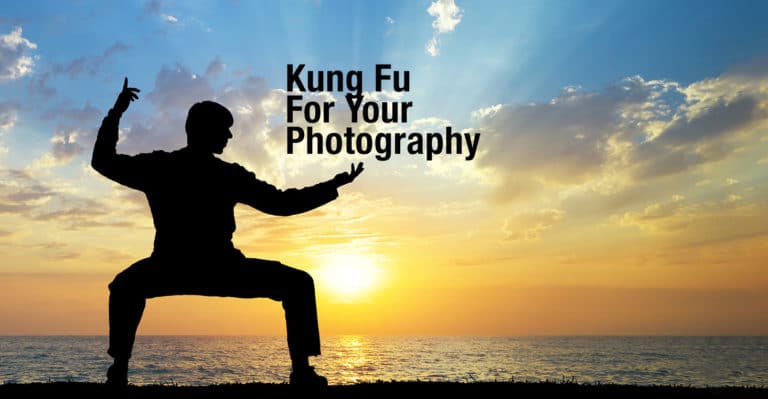
Kung-Fu For Your Photography

by Susheel Chandradhas

Kung Fu is the martial art weapon of the masses. It’s inception took ‘force’ out of the exclusive domain of the rulers, and empowered the common man.


Similarly, with amateurs putting their work alongside professional photographers on websites like Flickr, the line between master and student is starting to get blurred. How can you make the most of this situation?

Here are a few tips from some Kung Fu masters (in the movies)

1 ) Practice now for the future:
Kung Fu movies show the hero practising intensely before a showdown with an arch nemesis (think Jackie Chan, um, rather, the old-Jackie Chan).

Keeping in good practice ensures that you’re ready to pick up your camera and be ready to capture that brilliant photograph without worrying too much about the technical aspects.

By working out your mistakes before you actually get hired, or before you face that incredibly beautiful scenery, you also ensure that you present a much more professional front while working with a client some time in the future. Remember, “Wax on, Wax off” (oh sorry, that’s Karate)

2 ) Learn the way and then find your own way:
As with any subject, photography is based on some infallible truths. This is the substance that should make up your theory. Then, you take theory and turn it inside out, searching for different ways in which to make that theory work for you. If you practice enough, keep your mind free, and snatch at wisps of imagination, you could end up turning that theory into a very exciting practice.

3 ) Observe, Listen, Duplicate:
As with any learning, a teacher can only tell you so much. After that, it is your turn. Observe what others are doing, listen to those who are teaching you, and try to replicate what the masters have done. Once you do that, you’ll be able to create your own images with more flexibility and skill.

4 ) Be flexible:
A perfect split will keep you in good stead if you were in Kung Fu land. With photography, knowing how to use light, and suit it to the mood that you’re trying to create can do the same. Be flexible with the kind of lighting that you create, and learn how to change it quickly to suit your needs. Master Strobist is a good teacher for those who want to use off-camera flash.

5 ) Improvise:
Sometimes, you’ll find that you’ve got the wrong tool for the job, or that you don’t have your tools at all. It’s like facing the dragon master with a toothpick in your hands. Make the best of it. Put up a good fight and alter your technique to suit your tools. You may have to do a fashion shoot with just a simple digital camera, but if you use the right technique, you may just impress the editor.

6 ) Sharpen your senses:
Stay aware of everything that’s happening around you. Your eyes, ears and sense of balance and stability will keep you alive and well if you take photographs in the field. In your area of art, the eyes are more important than anything else. Keep them open and alert. Your balance will be tested again, and again. Practice walking on narrow short walls if you need to. The balancing beam is a good alternative. If you live in China, try the great wall.

7 ) Improve your reflexes:
The time difference between recognising an attack and blocking it, or recognising a weakness and taking advantage of it is very similar to the time that you have when taking a photograph. Sometimes the difference between an Un-believable photograph and a mediocre one is just a split second’s difference. Stay alert and react quickly, on instinct.

8 ) Stay fit, eat light, and eat right:
Kung Fu is an art that takes a lot out of you, physically and mentally. Photography does that too. It will eat up your time, your energy, and your mind. Stay fit, and you’ll be able to do it better.

9 ) Take every opportunity that presents itself:
The Dragon master has summoned you, and asked you to fight him with a toothpick and a nail. You’ve been waiting for this opportunity from the beginning of your Kung Fu life. When he asks you to fight, you fight. Don’t worry about the tools. Make the most of what you have.

Seize the day when an opportunity comes knocking. After all, they do come but once.

10 ) Learn new styles and techniques:
The way of the Intercepting fist, The way of the snapping branch, Drunken Monkey Kung Fu,  using Hyperfocal distance, or motion blur in your photographs; they’re just another way of using the underlying basics to present something that is wildly different from what is expected. Learn how to make use of them to make your photographs look different, and to give them impact. Eventually you’ll develop your own signature style.

Learn New Styles and Techniques of Photography

Photo: Herbs1


11 ) Learn how to work with different equipment:
The Staff, The Fist, Range-finders, filters and Medium Format cameras. They all have their places in your journey of discovery and you will eventually find reasons and occasions in which to use each piece of equipment. They will become and important part of your repertoire and each will help you perform a different task with greater ease and finesse.

12 ) Take the leap – its not like you’re jumping off a 5-storey building:
When presented with a challenge, remember to pull out all the stops to get the photograph as you visualised it. Make sure that you use all your accumulated knowledge and experience to deliver your best effort. You need to have paid attention to the other steps in this article before you get to this stage.

You may not be jumping off a 5-storey building, but it’s all the same… When presented with a problem that could either deliver you into new territory, away from the following hordes, you want to put every bit of your photography to work for you. Remember, the only luck you get is that which you create for yourself.

13 ) I know Kung Fu:
So, you’ve learnt Kung Fu. You’re the one… Now, the only one who can challenge you in your art form is yourself. What do you do now? Lay back and die? Go on a 500-year long meditation? Not likely for a Kung Fu master.

Challenge yourself! Compete with other masters, take your Kung Fu Photography to new heights, and teach yourself how to fly!

So, as one tale ends, another begins. Tell us your story…

This is part of the Beyond Phototips Birthday Special Series. Go here to see all the posts so far.

Share this Phototip:
  • Digg
  • del.icio.us
  • StumbleUpon
  • Facebook
  • Twitter

Obvious Street Photography Tips

by Susheel Chandradhas

Sometimes we tend to forget the obvious in our quest for the hidden. Here are a few ‘obvious’ tips to remember when shooting on the streets.

  • Get In close. All too often the actual ’subject’ of a street photograph gets lost in the activity going on around… Get close to the subject, make them the primary object in your frame.
  • Be observant. Street photography is all about observing people, their actions and juxtapositions. Keep your eyes open, look for interesting connections.
  • Shoot a lot. I tend to shoot only when I’m sure that I know that I have a good shot in my frame. While this is a good practice, it can lead to missed opportunities. Shoot more frequently than you expect to shoot and weed out the boring shots when you download your pictures.
  • Don’t worry about the light too much. Concentrate on the people, your composition and your safety. Today’s cameras do a great job of metering a scene well. Use their readouts. Maybe even shoot in auto exposure mode.
  • Use a ‘normal’ sized camera. I’ve had a lot of people balk when I pick up my Canon EOS 5D with its 24-70mm lens and flash. They go into “hide” mode; feeling shy and possibly even worried. This is one of the reasons why I’ve moved down to a ‘toy’ like camera.
  • Use a Wide Angle lens. Being a participant brings you closer to your intended subjects. It can bring you right into the midst of the action. Keep a wide angle zoom or prime lens handy for these occasions.
  • Participate. Some of the best street photographs I’ve seen are those of people who are fully aware of the photographer. You’re more likely to get a memorable photograph when you’re part of the scene and reacting to the emotions and drama that is being acted out around you.
  • Know when to shoot candids. Candid photography on the street is one of its charms. Use the right equipment – long lenses, nondescript clothing and casual attitude – and you could get some gems.
  • Dress Normally. Gearing out like a “photographer” could lead to some hostility. Dress normally, keep your camera bag small and inconspicuous.
  • Worry about your camera at home. Concentrate on the street when you’re shooting. I prefer to choose my equipment carefully before leaving for a street shoot and not worry about what I “could have got” with some other equipment. When you’re on the street, make sure that you involve yourself in the scene as much as possible. Street photographs don’t need high-quality equipment to bring out the right emotion. Its all about the moment. Keep it that way, and you’ll find yourself reacting to the right elements; People – not your equipment.
  • Know how your equipment works. Street photography is very spontaneous and a moments fumble with the controls can leave you wishing you were quicker with your equipment.
  • Carry your camera inconspicuously, but not suspiciously. This will give you opportunities in street photography that you would not expect. Be casual about the camera and keep it away from your face as far as possible. Try to avoid looking like a “photographer.” As a side effect, trying to hide your camera and sneaking a photograph in when possible may make you look suspicious. Like I said, be casual about the camera.

Obviously, one can go on and on about street photography tips. If you think that there are some more obvious tips that I’ve missed out, do leave them in the comments.

I’ll leave you with some interesting links on Street Photography

Share this Phototip:
  • Digg
  • del.icio.us
  • StumbleUpon
  • Facebook
  • Twitter

Selecting Photographs: What not to show

by Susheel Chandradhas

You’re an aspiring photographer or amateur photographer and want to show the world, or maybe just your relatives what you can do with a  camera and some good ol’ light. But where’s that brilliant photograph in which you’ve managed to time the shot just perfectly? Lost in the quagmire of shots that didn’t make the cut? Here’s one small tip with an illustration to help you out.

As a practice, I never used to carry more than two rolls of film on any photo shoot when I used to shoot on film. With digital, however, I’ve become a bit more careless and have found myself shooting around 200 frames on a reasonably long shoot.

At a recent photowalk, I decided to restrict myself just for the sake of old times, to seventy two frames (or two rolls of film. For those of you who don’t remember, film comes in cassettes of 24 frames and 36 frames, unless you buy some kinds of speciality film). I managed to restrict myself to around 100 frames, but I did find that I was actually watching my framing more carefully.

Here, I’m going to be sharing all the photographs that I took on that day. The shots that didn’t make it into my flickr stream as well as the ones that did make it (some that made it were included purely for sentimental reasons and not any aesthetic value).

Please do note that the pictures above are straight out of the camera and have not been processed at all. What I want you to notice is the promise of a good photograph, or the absence there-of. As you can see, I’ve milked the whole batch of photographs for all that they’re worth, and then went a bit further… with all that, and digital post production, I’ve manage to turn only 10% of the photographs that I took into pieces that may reasonably be put onto people’s walls.

These photographs would never have seen the light of day if events didn’t conspire to bring this post to you today. Everyone would only have seen the pictures you see below (also on my flickr page).

See the difference?

Conclusion

So what is the intention of this long-winded un-necessarily dramatic post? The intention is to show you that you don’t have to post every single photograph that you take. I throw away 90% of my photographs, and I urge you to do the same. Well, not just to throw away 90% of your photos because I say so, but to realise that only some of them have potential and recognise them for what they are: some of your best photographs.

Go through your flickr collections, your family album, your photo drawer and throw the bad pictures away. They’re the ones you don’t show off your photography skills that have bad composition, lighting and telephone poles sticking out of uncle Joe’s head.

By all means, keep the ones that have sentiment attached, but do throw out the ones with bad composition or the ones where big uncle Ben’s butt was stuck in the lens. They’re not going to help show off your photography skills by any means.

I’d love you to share any experiences that you’ve had where a bad selection of photographs have come back later to haunt you. Even otherwise, a nice word wouldn’t hurt.

Share this Phototip:
  • Digg
  • del.icio.us
  • StumbleUpon
  • Facebook
  • Twitter

Continue Next page

Featured Series

Looking for something more? Take a look at these series of posts that Beyond Phototips is running right now.