Beyond Phototips

Avatar

Photography for the Serious Amateur.

Tiny Tips 17: Retro DSLR

by Susheel Chandradhas
Too young and eager to die from H1N1
Creative Commons License photo credit: Alex Dram

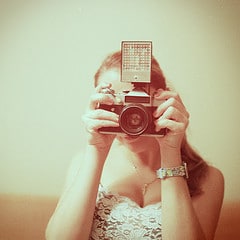
A Digital SLR is a modern piece of equipment. It has nothing of the old-world charm associated with photography. No “wait till the film is processed“, no “did I get the exposure right“, no “oh, this is not good enough to be photographed“, no “Is the light right?”, no “I’ve got only 2 frames left. They’ve got to count“. Instead, you’ve got instant gratification, with nothing left to your imagination. You see the exact photograph that will be printed (or viewed on your screen) instantly, and if you want to change it, you can experiment till you get it right.

But why not try to experience the magic of not knowing exactly how your photographs are going to turn out? Want to try it? Simple.

  1. Set your ISO to 100, 200 or 400, and set your white balance to Daylight because these are the most easily available film rolls available.
  2. Set your camera mode to M so that all the aperture and shutter speed decisions are made by your brain, and not the camera’s.
  3. Set up your camera to disable image reviews after you’ve taken a photograph. If you don’t have this option, stick a Post-it Note on the rear LCD screen so that you can’t see the image. Post-it Notes leave no sticky residue on the camera once you peel them off, so they’re perfectly safe for your camera.
  4. Stick a cut Post-it Note on the top LCD so that you resist the urge to look at the number of frames remaining, shooting / AF mode and other details.
  5. Rely on your intuition, and try not to use the light meter readout in the viewfinder.

Any other suggestions? Leave ‘em in the comments.

Watch out for a Photo Project based on your newly set up Retro DSLR in the days to come.

Share this Phototip:
  • Digg
  • del.icio.us
  • StumbleUpon
  • Facebook
  • Twitter

Tiny Tips 16: Always Use a UV Filter

by Susheel Chandradhas

A UV Filter is an important part of every photographer’s kit. This may seem like a no-brainer to any sufficiently advanced photographer reading this post, but to the beginners: take note: this is a very important part of your equipment. Or should be.

Why Should you ‘Always’ use a Ultra Violet filter on your lens?

Because they protect your Photographs, your Lens, and your Investment in Photographic Equipment. UV filters primarily filter out the invisible UltraViolet light that causes ‘haze’ on film (and some dSLR sensors), but their broader list of purposes includes:

  • Protecting your lens from dust and flying sand
  • Protecting your lens from scratches (I’ve seen some bad scratches avoided because of this filter)
  • Protecting your filter mount from getting bent
  • Saving your lens by sacrificing itself (filters are housed in aluminium frames, these are soft and absorb impact well even though they’re not meant for this purpose)
  • Preventing Sea Spray (and salt) from getting into the lens (for this purpose alone, buy a UV filter)

Some people say that a UV filter reduces the quality of the image that you take. They’re referring to an extremely high level of quality that is not required by most people on this planet. If you want to ensure that your image quality does not deteriorate, simply get a good quality filter and keep it clean.

Remember to get one for each lens that you have. When you’re out taking pictures, don’t take them off unless you absolutely have to.

Has a UV filter saved your equipment? Let us know in the comments.

Aff: UV Filters on Amazon

Share this Phototip:
  • Digg
  • del.icio.us
  • StumbleUpon
  • Facebook
  • Twitter

Tiny Tips 15: Hyperfocal Distance in Street Photography

by Susheel Chandradhas

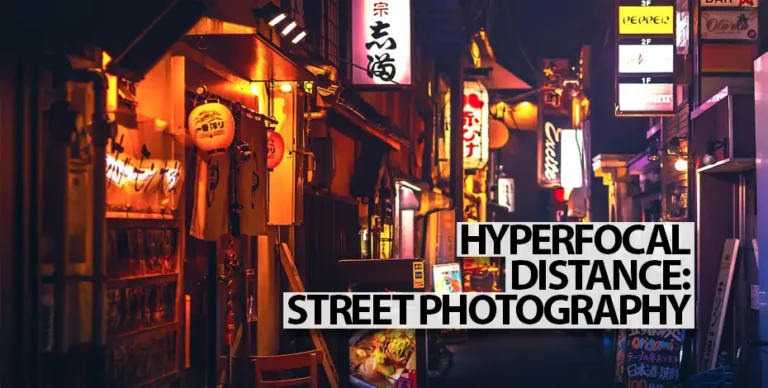
If you want to take really quick & sneaky photographs on the street without putting your eye to the viewfinder, here’s a sneaky trick.

Setting your lens in manual focus mode, and setting it at its Hyperfocal distance will allow you to take photographs with a great deal of flexibility, often allowing you to shoot from your hip, or while supporting the camera on a steady surface. Very un-obtrusive.

Remember that Hyperfocal distance works best when you’re using a rather small f-stop, like f/16 or f/22, so set your camera in aperture priority mode and shoot on a relatively sunny day, and you’ll find nearly everything in focus. Of course, this works best if you’re using a wide-angle or normal lens.

I’ve managed to get everything from infinity to objects around 4 feet away in good focus while trying this technique recently, with my Nikon F3 and a 50mm lens. It worked great!

Do try it out and let us know how it worked for you, or if you’ve got some other tips involving Hyperfocal Distance or Street Photography, do share them with us in the comments.

Share this Phototip:
  • Digg
  • del.icio.us
  • StumbleUpon
  • Facebook
  • Twitter

Tiny Tips 14: Hold your Camera Right

by Susheel Chandradhas

The first rule of holding your camera is that it should be steady. This will ensure that you get sharper pictures in lower lighting situations, and that your pictures are sharper in general.

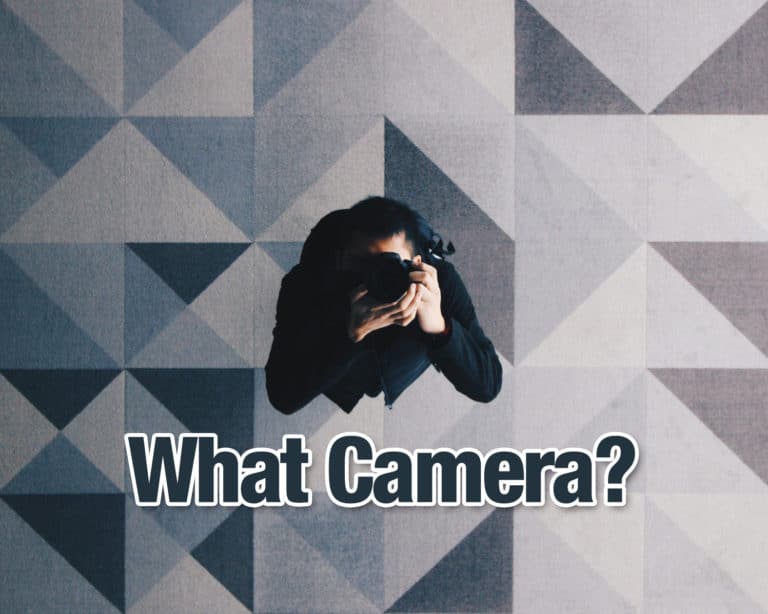
If you’re using a dSLR, put your left hand below, supporting the base of the camera, with the index finger and thumb positioned to adjust focus/zoom. Support your left elbow with your chest and grip the camera body firmly with your right hand, positioning your right index finger above the shutter release.

Posture is important too. Stand firm and erect with your feet spread apart a bit. Do not lean forward, this will make your stance unsteady. Standing straight and with good posture will also reduce strain on your back, especially if you’re carrying a lot of gear.

Do you have other tips on how to hold your camera? Drop ‘em in the comments.

Share this Phototip:
  • Digg
  • del.icio.us
  • StumbleUpon
  • Facebook
  • Twitter

Tiny Tips 13: To the Aspiring Professional – Know Where Your Money Lies!

by John Sudhakar

If you know what you like to shoot and what you are really good at Photographing, you also have to know the kind of photography in which you can make money. Identify branches of photography where you need to develop your Photographic talent to enable you to make money to sustain a career in photography.

The area where you make money, may not be the branch of photography dearest to your heart! When you make enough money … you can shoot to your hearts desire!

Happy Shooting…

Share this Phototip:
  • Digg
  • del.icio.us
  • StumbleUpon
  • Facebook
  • Twitter

Tiny Tips 12: To the New Enthusiast – Know What You Like to Shoot

by John Sudhakar

Work towards knowing where your talent (If not your Genius) lies in photography.

Decide what you like to shoot. It may be Birds … Historical Ruins … the Female Form … Portraits; or any one of the good subjects you have around you!

Next… decide what you are really good at shooting! Like Portraits … if you can capture the incredible range of emotions on the Human Face … or may be the real beauty of the human Form.

What ever it is, know what you like to shoot and what you are really good at photographing … and know the difference.

Happy Shooting!

Share this Phototip:
  • Digg
  • del.icio.us
  • StumbleUpon
  • Facebook
  • Twitter

Continue Next page

Featured Series

Looking for something more? Take a look at these series of posts that Beyond Phototips is running right now.