Beyond Phototips

Avatar

Photography for the Serious Amateur.

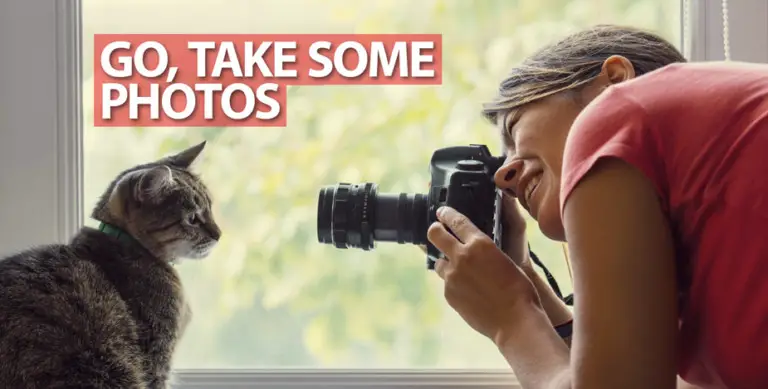
Stop reading this… and take some photographs.

by Susheel Chandradhas

Well, the rest of this post is not necessary, I’ve said it all in the title.

However, if you happen to be reading this late at night, you’re tired, and don’t mind a bit of baloney, read on…

Why did I say this?

1. When you have to shoot, Shoot! Don’t talk.

Tuco Says it all. Do use a camera though…

2. Some people read too much.

They theorise, record facts, and they research techniques, look at beautiful photographs, read about the photographers that took them, and the amazing equipment that these brilliant photographers took these enchanting photographs with and then they sit back, too confused to act. They deliberate about what equipment to buy so that they can get the best photographs, ai-ya-yai-a-yai!

Like I said… Just shoot… When you have the need for a gazillion pixel camera, you’ll know… and your fans will be willing to buy you one… Till then, just take out your cameraphone, or your rusty film SLR, or your brand new dSLR that’s been sitting on the shelf, and take photographs…

3. Some people worry too much.

They worry that their cameras will get dirty. They worry that their photographs may not be good enough.

C’mon man! Face facts. Nobody was as good as Ansel Adams when they first picked up their camera. They practiced. They got a bucket load of shitty pics, they figured out what was wrong, corrected the mistakes and moved on…

4. Some people don’t get the time.

Good Photography is about how you see the world around you. When you’re seeing photographs that you should be taking all the time, everywhere around you, and you’re not getting any of them in your camera, you know that you’ve got to make the time… or get a smaller camera, one that you can put in your shirt pocket!

If you don’t have inspiring things around you, you know you’ve got to go out a bit more… When you do, take that camera along with you.

5. Some people are just plain lazy.

And maybe, just maybe… that’s why you’re reading this post? Get off your lazy arse and mess around with your camera… Learn a new technique, or just get better acquainted with your gear!

Know of other reasons why people want to, but don’t take photographs? Leave a comment.

Share this Phototip:
  • Digg
  • del.icio.us
  • StumbleUpon
  • Facebook
  • Twitter

What keeps you addicted to photography?

by Susheel Chandradhas

Do let us know what keeps you addicted… Or, are you NOT addicted as yet?

Share this Phototip:
  • Digg
  • del.icio.us
  • StumbleUpon
  • Facebook
  • Twitter

The Art Of “Simple”

by Susheel Chandradhas

Keep things simple, yet beautiful. Remember this.

Share this Phototip:
  • Digg
  • del.icio.us
  • StumbleUpon
  • Facebook
  • Twitter

Lessons in Creativity that you can learn from Parkour

by Susheel Chandradhas

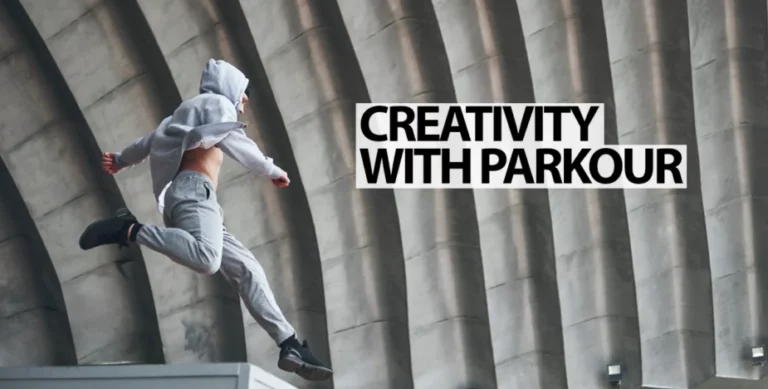
You’ve watched Casino Royale, or Babylon A.D.? Yes? Then you’ve seen traceurs in action.


They’re the guys who run around cities, jumping over walls, climbing the outsides of buildings and generally doing ‘impossible’ stuff. Their ’sport’ is called “Le Parkour” or “FreeRunning” and the practitioners are called ‘Traceurs’. Their goal is to get from point A to point B in the most graceful and efficient way physically possible.

Now, where’s the creativity?

Their creativity is in the way that they tackle each obstacle. Each of them may go down the same route, but tackle the same obstacle in different ways. See this video clip to understand just what they do.

What can you learn?

  1. Conditioning is King – Traceurs have to be able to deal with real-time changes in their environment. They practice for hours every day in an effort to develop an innate “muscle memory” that will help their bodies understand their commands and adapt their movements instantaneously.It’s the same with photography. If you practice enough, your adjustments will come to you so naturally that you will forget about the technical aspects altogether. Practice makes perfect. It also helps you forget about the camera and think more about the things that are going on around you… essential for a ‘brilliant’ photograph.
  2. Understand you environment – As a photographer, you need to understand everything that’s going on around you while taking photographs. This is more important if your environment is one that is constantly changing.
  3. Use the environment to your advantage – This is an offshoot of the previous point. Knowing what to expect in a given situation will help you plan out your shots in advance, anticipate what is about to happen and make the most of that situation. A keen eye for detail can help you in this.
  4. Keep your mind free – Your mind is at it’s creative best when it’s free of inhibiting thoughts. Lots of practice will help you with this. It takes your conscious thought away from repetitive actions that you’ve practiced a thousand times before, and helps you concentrate on the creative aspects of your photography that confront you.
  5. Know the rules and respect them – This may seem odd at first. Do ‘the rules’ mean the rules of photography? Do they mean the law of the land? Do they mean the confines of ‘good conduct’?I believe that this means all of the above mentioned points. Know the rules of aesthetic photography, The law of the land, and the limits to which you can push decency. Stay within those confines, and people will respect you and treat you well.
  6. View the world through childrens’ eyes – What could be less confining, more innocent and more questioning than a child’s mind? Try to view the world through a child’s eyes and you’re sure to see something different and new all the time.The traceur is urged to do this because that is what they’re after… a mind and body free of the restrictions imposed on it by ourselves, yet responsible and ready for action.
  7. Express yourself – The traceur seeks a world free of inhibitions, and their freedom of movement beyond the “traditional” gives them a form of creative expression that is unique.You have that freedom too… your camera gives you a means of expressing your thoughts that is impossible for some. So, do not restrict yourself.
  8. Know who you are, and why you want to do what you do – A traceur’s journey is hard on the body, mind and soul. It is a path that is as difficult as the highest form of martial arts at it’s very zenith. Traceurs who want to attain this peak are advised to ask themselves why they want to achieve that level.Why does this matter? Because, as with anything, if you know your intentions and motivations it will strengthen you and guide your thoughts and actions. If you do not intend to reach the very peak of your skill, you will know that you need not put in your best efforts here… Rather, seek out where your efforts should be directed to achieve your goal.

I’ve recently been enthralled by “Parkour” videos that are freely available on the internet and have been studying their training methods and the reasons why they do what they do… If you get nothing else from this post, I hope you go away with an appreciation of how wonderful the movements of these athletes are, and a yearning to be be able to do something close to it.

This post is part of the Beyond Phototips Birthday series, see the other posts from this series here.

Share this Phototip:
  • Digg
  • del.icio.us
  • StumbleUpon
  • Facebook
  • Twitter

7 Ways To A More Observant Life

by Susheel Chandradhas
Me trying out urban minimalism
Creative Commons License photo credit: Lapsklaus

Every single person can benefit from being more observant. Not just photographers, though photographers have the most to gain from being observant… (this is such a ‘duh’ moment… but humour me and do read on)

This is the second part of a two-post series on why a good photographer is also a good observer. In the first post we discussed some things that you could pay attention to, to help you become more observant. Today we’re looking at some habits that you can develop to help you along.

Becoming more observant is not something that you can do overnight. It takes some care, diligence, and effort to do so. Here are a couple of things that you can try on a daily basis that will possibly help you become more observant. With time, some of them will become habits and will become part of your daily life.

  1. Take a painting class. Drawing and painting are very heavily dependant on your powers of observation. This one step could be a double-edged sword as it will also improve your assessment and understanding of light, materials and shadows.
  2. Take note of your self. Your handwriting, and other things that come to you subconsciously, like the way you speak, the words and gestures that you use are all part of who you are. If you want to be more observant of others, first be observant of yourself and your habits. Know Thyself.
  3. Be a mental list-maker. Make a mental record of things around you see how they’re placed and check to see whether they’re the same when you next see them, soon it will become second nature to you.
  4. Pay attention to details. They say “God is in the details.” Paying attention to the little details keeps your mind more alert and always on the watch for interesting bits that you could use later.
  5. Listen to what people say. Yes, you do listen to people. But are you ‘really’ listening? All to often, we find ourselves ‘listening’ to somebody while working at the computer or watching something on the television. Make it a point to give your full attention to the person who is talking. If not all the time, at least sometimes. Remember that listening is an art in itself.
  6. Spend some time everyday just watching people.You see people all the time. But do you really ‘observe’ them? Their expressions, gestures their attire, the newspaper or magazine that they’re reading, it’s all part of who they are, and offer insights into their personality, background and behaviour. With time and practice, some ‘people-watchers’ can even predict what the person is going to do next.It’s a great way to spend time and is remarkably insightful after some practice. Just make sure people don’t think you’re stalking them, or you could find yourself in the slammer.
  7. Remember that you need to observe things. It is rather easy to forget that you’re observing something. Make it your daily mission, and remember your objective.

How will it help you?

  1. It will offer you an amazing insight into how people think, react, and behave in general. This could have startling revelations in your work, no matter what you do for a living.
  2. It will help you understand how a great many pieces of equipment work, because you’ll find yourself observing the buttons and symbols on the equipment and also observing how people make things work, and learning from that observation.
  3. It will help you choose the right moment to click as the crowds part, when watching a particular person walk down the street, or the right moment as your child smiles at you so sweetly.
  4. It will help you appreciate people around you better and possibly help you know what they are feeling and thinking.

More tips? Share them in the comments.

This is part of the Beyond Phototips Birthday Special Series. Go here to see all the posts so far.

Share this Phototip:
  • Digg
  • del.icio.us
  • StumbleUpon
  • Facebook
  • Twitter

How did you all get so good?

by Susheel Chandradhas

This is a guest post by Podcaster, John Arnold.

Photo: Floyduk

There’s no fighting it – the standard of modern day amateur photography is way better than it was even just a decade ago. The quality of the submissions I see on the PhotoWalkthrough flickr group is excellent – occasionally spectacular. You, dear reader, are certainly a better photographer today than you’ve ever been.

It’s easy to assume that the reason for this improvement is the rise of digital cameras and the associated technological advancements in metering, focus, exposure calculation and so on. And no doubt those things have contributed greatly to improving the technical aspects of our pictures, particularly when we have the time to check our work on the back of the camera and re-shoot if things didn’t work so well. But I have another theory about why we’ve all improved so much. Think about it – what are you doing right now?

You’re reading a blog. Perhaps you’re on your lunch hour at work or perhaps you’re relaxing at home or maybe you’re reading this on your iPhone or Blackberry while riding the train to the office. But basically what you’re doing is self-teaching. And with internet access at home, at work and on the move it’s never been easier to fill your spare time teaching yourself about photography.

The opportunity to self-teach extends way beyond the thousands of blogs and websites that have sprung up online. There’s also a healthy crop of free tutorial sites, photography interviews and review sites with many available as audio or video podcasts. If you don’t know what a podcast is then you’re missing out! A podcast is like a radio or TV show that you download from the internet – usually for free – and that you can watch or listen to on your computer, your iPod or iPhone or almost any other device capable of playing MP3 files, including most in-car satellite navigation systems. Pick up a copy of iTunes (for free) at www.apple.com/itunes and check out the podcast section of the iTunes store. There’s a ton of great photography content available there for free and it’s perfect for listening to in the car or while exercising. And of course the videos are a brilliant way to learn at your computer or while travelling (not driving!).

But even beyond the blogs and the podcasts there are numerous other subtle but important reasons why we’re getting better at photography. Chief among these has to be the sheer abundance of great photography on display on the internet. Websites like Flickr have made it incredibly easy to show our work and to view the work of others. Just looking at lots of photography helps inspire us, giving us ideas for our own work.

Community

I’ve long been an advocate of the educational value of not just receiving critique but especially giving critique. The simple act of taking time to decide what you like or dislike about a photograph and putting it into words makes you think about what good photography is to you. It crystallizes your own style and taste and there’s no right or wrong. Community photo sharing websites might, in fact, be the single most valuable self-teaching resource available. If you’re not already showing your work on one of the many (Flickr, SmugMug, PBase etc) photo sharing sites then I’d encourage you to do so. It requires a little courage at first but the rewards are well worth it. Joining the online photo sharing community is like joining a huge photography club that you can attend in hours that suit you. You can give it as much time as you have available. Just be sure to engage in giving critique. You’ll learn more from that than anything else.

One of the other benefits of joining in with an online photography community is that they often encourage you to set yourself assignments. You already know that you should be going out shooting if you want to learn and improve. Well an online community can often inspire or even instruct you to go out and shoot something in particular.  Why not head outside right now and shoot exactly 20 pictures of interesting details about the building you live in – don’t shoot any detail that is more than 1 foot across. Then post your favorite one in the comments to this post or on the Beyond Phototips Flickr Group? I’m serious – you’ve got 20 minutes to spare right? Why not spend them stretching your mind and join in with the community here on the blog a little by showing us where you live? Little creativity exercises like this are fun and bring people together as well as helping us self-teach.

Of course the next step beyond merely joining in with the online photography community is to become a teacher yourself.  Do you have a picture that you’re especially proud of? Why not record a quick video or jot down a few lines about how it was made. Where did you shoot it? Why? How was it post processed? What gave you the ideas? It doesn’t have to be a regular thing if you don’t want. Mail a blog owner or podcast producer and see if they’d like to link to or even publish your work. If you think you learn a lot by giving critique then you should see how much you can learn by explaining your work!

Who is this guy?

John Arnold is a semi-pro photographer living in the northwest of England. He’s the presenter of PhotoWalkthrough, a free tutorial video show all about photography and digital photo editing using Lightroom and Photoshop. To see the show visit www.photowalkthrough.com or search for photowalkthrough in the iTunes podcast directory. PhotoWalkthrough is part of the PhotoCast Network where you can find links to some of the best photography podcasts available.

This is part of the Beyond Phototips Birthday Special Series. Go here to see all the posts so far.

Share this Phototip:
  • Digg
  • del.icio.us
  • StumbleUpon
  • Facebook
  • Twitter

Continue Next page

Featured Series

Looking for something more? Take a look at these series of posts that Beyond Phototips is running right now.